Malaysia’s Property Market Posts Moderate Growth in Q1 2026
May 16, 2026
Malaysia’s property market started 2026 on a cautious note, recording moderate performance in the first quarter, according to the Property Market Report for Q1 2026 released by the Valuation and Property Services Department (JPPH) on 14 May 2026.
Transactions Dip, But Market Holds Steady
A total of 89,966 property transactions were recorded in Q1 2026, representing an 8% decline compared to the same period last year. Transaction value also slipped marginally by 0.6%, settling at RM51.09 billion. Despite the pullback in volume, JPPH Director-General Sr Abdul Razak bin Yusak described the market as remaining “controlled and resilient,” noting that the slowdown reflects a moderation rather than a structural weakness.
House Prices Continue to Rise
One bright spot is the Malaysian House Price Index (MHPI), which registered a positive gain of 1.7%, reaching 235.2 points. The national average house price now stands at RM507,533 per unit.
Most states recorded price growth ranging from 0.3% to 7.2%, with only Negeri Sembilan and Sabah posting slight contractions of 0.2% and 2.3% respectively, while Perak remained flat.
By property type, terraced houses and semi-detached homes led the gains, each rising 2.2%, followed by high-rise units at 1.3%. Detached homes, however, edged down by 0.7%.
New Launches Slow, Overhang Remains a Concern
The new residential launch segment showed subdued performance, with only 9,112 units launched in Q1 2026, a decline from the same quarter in 2025 and achieving a modest sales rate of just 11.5%. This raises questions about developer confidence and affordability challenges facing buyers.
The residential overhang situation continues to be a concern. Unsold completed residential units surpassed 32,000 units, valued at RM16.37 billion, a 7.6% increase in volume from the previous quarter, though value fell 7.7%.
The serviced apartment subsegment also saw its unsold completed stock rise to 19,263 units worth RM16.52 billion, up from 18,752 units valued at RM15.42 billion in Q4 2025.
Commercial Property: Stable but Soft
In the commercial segment, retail occupancy in shopping complexes held steady at 79%, while privately owned purpose-built office occupancy nudged up slightly to 72.3% from 72% a year ago, a marginal improvement that signals cautious stability rather than strong demand recovery.
Outlook: Resilient, With Caveats
Looking ahead, JPPH expects the property market trajectory to remain resilient, underpinned by government support through the MADANI Economy framework. The government continues to roll out targeted measures via Budget 2026, including an expanded Housing Credit Guarantee Scheme (SJKP) of up to RM20 billion to benefit 80,000 homebuyers.
First-time homebuyers also benefit from a full stamp duty exemption on instruments of transfer and loan agreements for properties priced up to RM500,000, extended until end-2027.
Infrastructure development, particularly transit-oriented developments (TOD), is expected to serve as a key catalyst for property market growth in the medium term.
That said, geopolitical headwinds from the escalating Middle East conflict are contributing to investor caution globally, and Malaysia is not immune to the resulting pressures on financial markets and sentiment.
The Bottom Line for Buyers and Investors
The Q1 2026 data paints a picture of a property market navigating a soft patch amid external uncertainties, but supported by structural policy tailwinds. For prospective buyers, particularly first-timers, the current incentive landscape remains attractive. Investors, however, should keep a close eye on the overhang data and occupancy trends before committing.
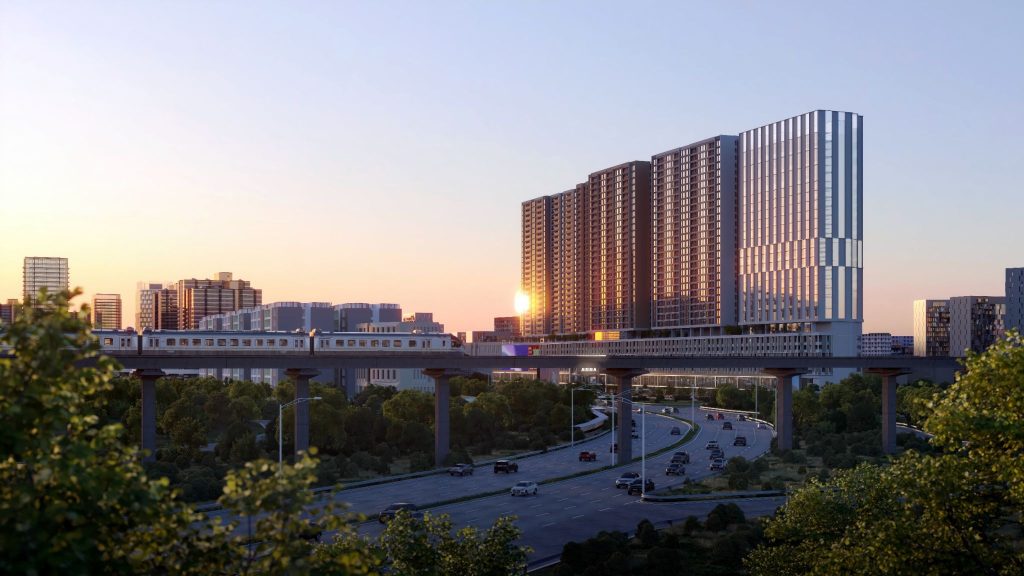
An artist’s impression of ARRA Residences, where connectivity matters most. Freehold homes in Ara Damansara combine LRT connectivity, everyday conveniences...









POST YOUR COMMENTS