KUALA LUMPUR: Rising construction material costs caused by the ongoing conflict in the Middle East have not derailed investor confidence in Malaysia’s property market, which is underpinned by the country’s resilient economic fundamentals, Housing and Local Government Minister Nga Kor Ming said.
Nga said Malaysia remains on stable economic footing despite mounting geopolitical uncertainty and increasing volatility in global commodity and supply chain markets, particularly for construction-related materials such as steel, cement and reinforcement bars.
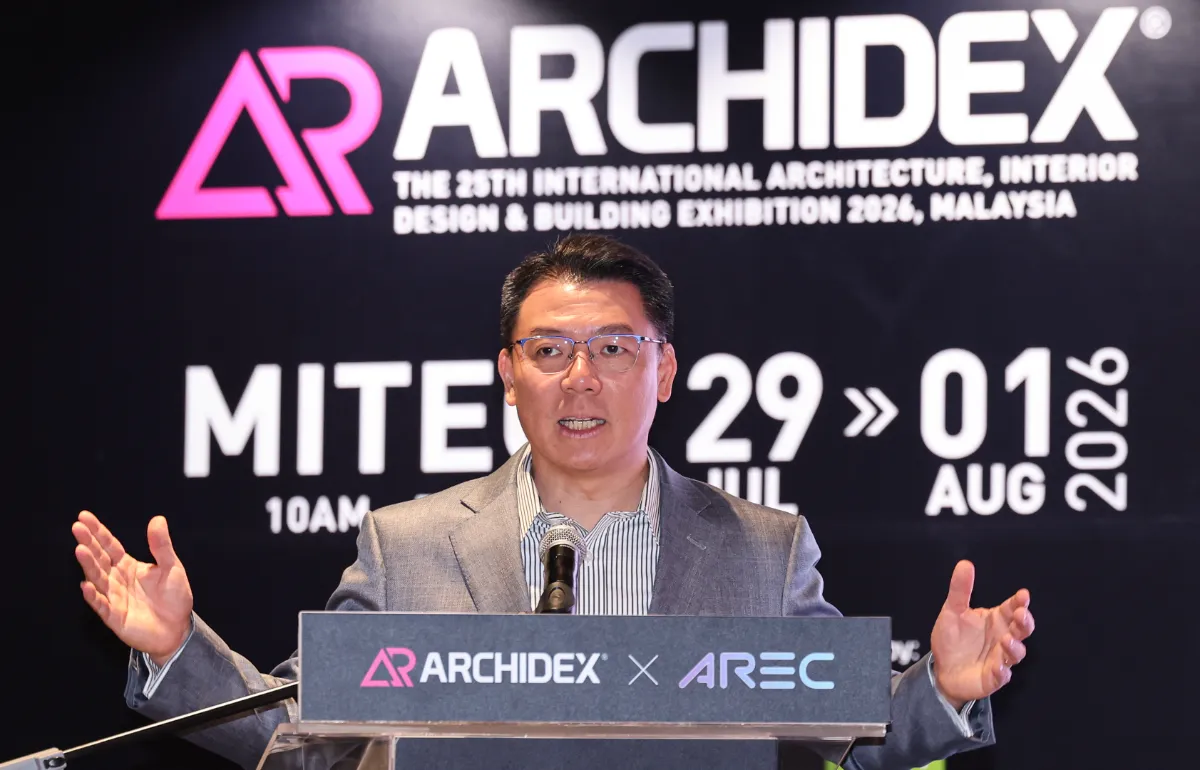
“Recognition by international institutions such as JPMorgan, which named Malaysia among the most resilient economies in Asia, has strengthened investor confidence in the local property market,” he said at the preview of the Asean Real Estate Conference (Arec) and Archidex 2026 today.
However, Nga acknowledged that developers are facing growing cost pressures linked to geopolitical tensions in the Gulf region, which have disrupted global supply chains and raised concerns over higher construction material prices.
Citing a recent Real Estate and Housing Developers’ Association Malaysia survey, Nga said around 30% of respondents expect a significant impact on the property and construction sectors, while another 43% anticipate a moderate impact should geopolitical tensions worsen further.
He said key building materials such as steel, cement and reinforcement bars remain among the inputs most vulnerable to price volatility if geopolitical tensions persist, potentially placing additional pressure on project costs, margins and affordable housing delivery.
In response, Nga said, the Ministry of Housing and Local Government is preparing measures to cushion rising construction costs, including a proposed “Cement Rahmah” initiative for affordable housing projects priced below RM300,000 per unit.
“As such, the ministry is taking an initiative and proactive step in partnering up with the Malaysia Cement and Concrete Association to roll out Cement Rahmah initiative for all affordable housing projects priced below RM300,000 per unit.”
The initiative aims to offer cement packs below prevailing market prices to help developers manage rising input costs amid heightened volatility in global commodity and supply chain markets.
Nga said the measure is intended to ease cost pressures on affordable housing developments while ensuring such projects remain financially viable and continue moving forward despite increasingly challenging operating conditions.
He also linked the government’s broader economic response to measures aimed at managing inflationary pressures arising from global energy volatility and geopolitical uncertainty in the Middle East.
“Furthermore, Madani Government is leveraging Malaysia’s position as a net energy exporter to build a robust fiscal buffer. By concurrently rationalising our operating expenditures, we aim to unlock up to RM10 billions in savings, enabling a strategic redirection of capital into critical sectors,” he said.
Nga said the government would continue maintaining targeted subsidy mechanisms, including Budi95 and Budi Diesel, to cushion households and businesses against rising living and operating costs.
“We are dedicated to maintaining targeted subsidies, including Budi95 at RM1.99 per litre and Budi Diesel at RM2.15 per litre, while for public transport, RM1.88 per litre, as key measures to keep inflation in check,” he said.
“Combined with direct welfare programmes like Sara (Sumbangan Asas Rahmah) and STR (Sumbangan Tunai Rahmah), we are working hard to help cushion the impact of the rising cost of living amidst the ongoing tension in the Middle East.”
Despite the uncertain external environment, Nga said, the government remains committed to sustaining affordable housing delivery under the 12th Malaysia Plan.
Malaysia has surpassed its target of approving and constructing 500,000 affordable homes by achieving 511,544 units as of last year, he added.
Nga said the ministry will continue offering fast-track approvals as incentives for developers undertaking affordable housing projects.
Against this backdrop, he positioned Arec and Archidex as increasingly important platforms for policymakers, developers, architects and industrial players to exchange ideas and strengthen regional collaboration.
Arec 2026 and the 25th edition of Archidex, which will take place from July 29 to Aug 1 at the Malaysia International Trade and Exhibition Centre, are expected to serve as key platforms for regional policymakers, architects, developers and industrial players to exchange ideas and strengthen business collaboration.
This year’s Arec will retain its three main segments, forum, business matching and exhibition, while placing greater emphasis on regional resilience, sustainable urbanisation and supply chain cooperation.
Themed “Rethinking Real Estates: Housing With Hearts”, the conference aims to encourage industry players to move beyond purely profit-driven development models towards approaches centred on community wellbeing and social sustainability.
“As president of the UN-Habitat Assembly, Malaysia holds a major responsibility to unite transformative ideas through the 4P principle: People-Public-Private Partnerships, and translate them into local action,“ Nga said.
Archidex 2026 is expected to be the largest edition in the exhibition’s history, spanning 39,000 sq m with more than 900 exhibitors.







POST YOUR COMMENTS