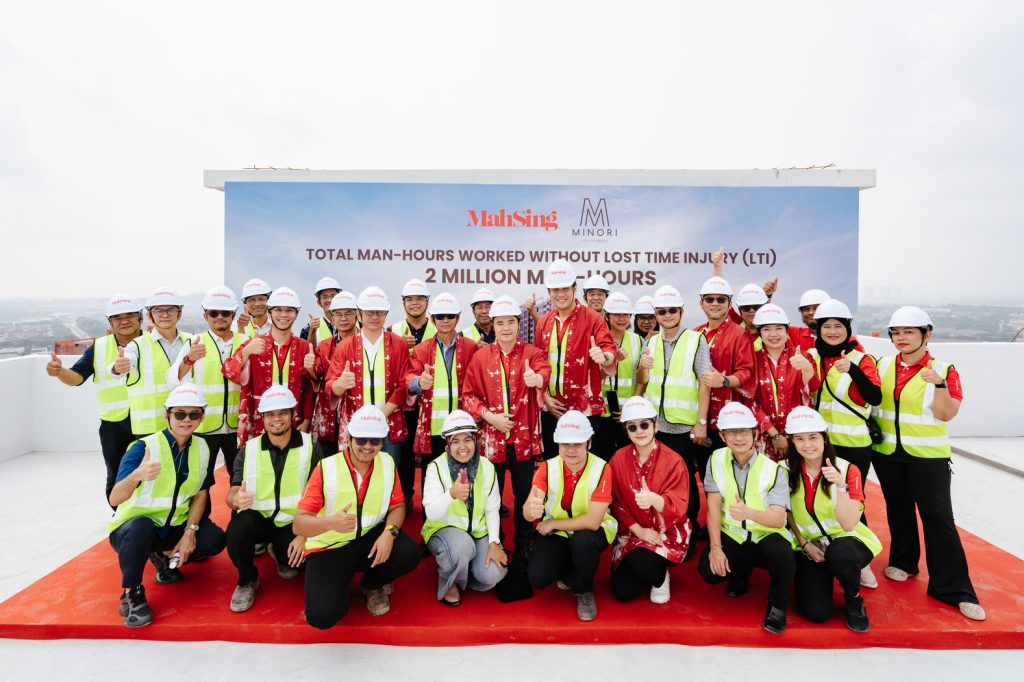
Mah Sing tops out M Minori in Johor Bahru
From
/ 17/09/2026
Mah Sing management team, consultants, contractors and project team at M Minori celebrating the development’s top-out and achievement of two...
Read More


KUALA LUMPUR: Industrial flooring failures are affecting more than maintenance costs, with 62.8% of Malaysian businesses surveyed reporting operational disruption from flooring issues, according to a Nippon Paint Malaysia survey.
The Industrial Flooring Performance and Business Impact Survey involved 129 respondents across manufacturing, logistics, food and beverage processing, healthcare and pharmaceutical, retail and other operational environments.
More than half (51.2%) reported recurring flooring problems after repair or rectification while 48.9% said they were definitely or likely to undertake an upgrade, replacement or major repair within the next 24 months.
“Industrial flooring is quite literally the foundation on which many businesses operate, yet its performance is rarely considered from a business continuity perspective until something goes wrong. When a floor fails in a production line, warehouse, clean room or food-processing environment, the consequence is not simply the cost of repairing the surface.
“Businesses may have to stop operations, redirect workflows and manage safety, hygiene or compliance risks. Industrial flooring should therefore be viewed as operational infrastructure, rather than simply a finishing specification,” said Nippon Paint Malaysia general manager Tay Sze Tuck.
The survey found 46.5% of respondents had incurred more than RM50,000 in direct flooring-related repair or rectification expenditure while 18.6% reported spending more than RM500,000.
Production efficiency and workflow were the most commonly reported impacts at 45%. Recurring problems were another concern, with 34.1% reporting that flooring issues required multiple repair attempts. Meanwhile, 21.7% said their flooring issues remained unresolved.
“This creates a repair-repeat cycle where organisations can end up spending repeatedly on the same asset while continuing to absorb operational disruption,” Tay said.
More than half (57.3%) of respondents believed their flooring problems could have been reduced or prevented by selecting a more suitable flooring system from the outset.
“The findings reinforce a simple point: the right flooring decision starts with understanding the environment it needs to perform in. By matching the flooring system to the operational demands of the facility from the outset, businesses can reduce the risk of recurring failures and the disruption and costs that come with them,” added Tay.
Source: StarProperty.my









POST YOUR COMMENTS