NREC 2026: Rethinking Malaysia’s Property Model Amid Energy and Affordability Pressures
Apr 24, 2026
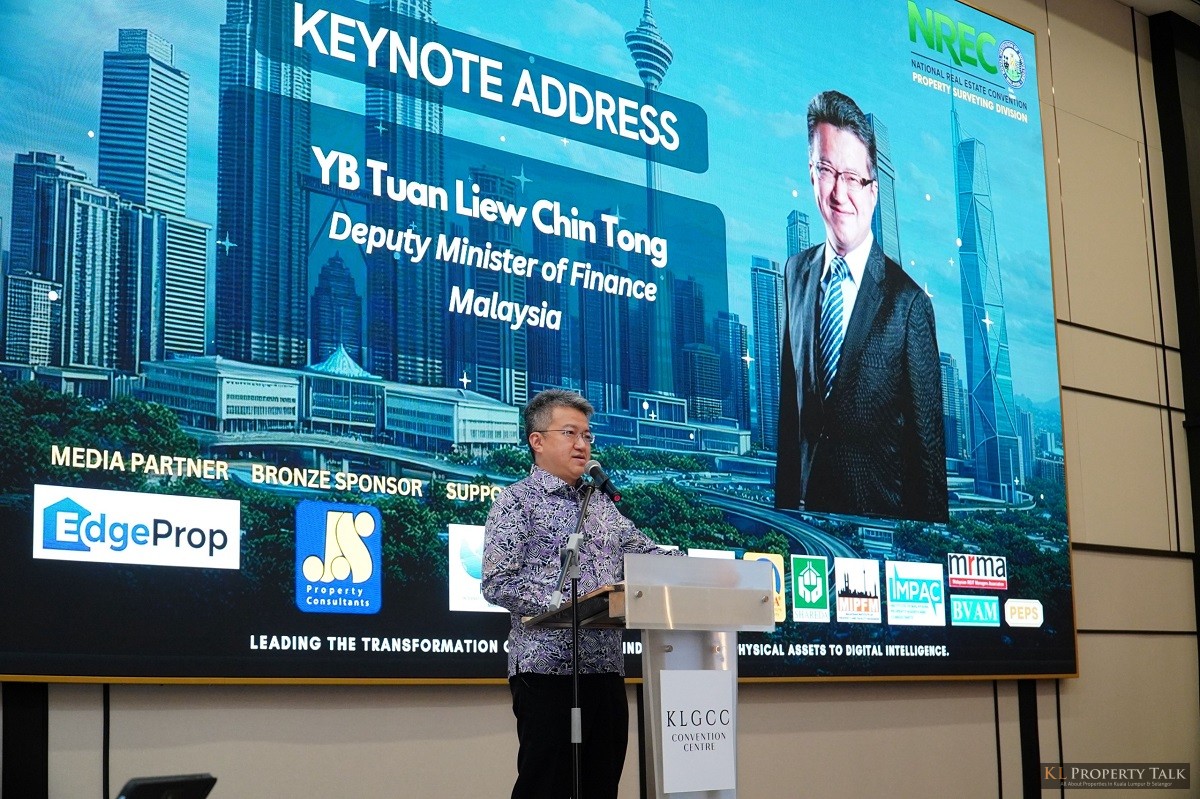
Malaysia’s property sector may be heading toward a structural inflection point, as highlighted during the National Real Estate Convention (NREC) 2026. In his keynote address, Liew Chin Tong drew attention to a growing mismatch between development patterns, energy realities, and affordability—raising questions about how sustainable current real estate trends are in the years ahead.
Held in Kuala Lumpur and organised by Royal Institution of Surveyors Malaysia’s Property Surveying Division with EdgeProp as media partner, the convention carried the theme “From Land to Cloud: New Blueprint for the Property Industry.” The discussions reflected a broader shift in thinking, from traditional brick-and-mortar growth toward a more integrated, resilient and technology-enabled property ecosystem.
Rethinking suburban growth amid energy constraints
A central issue raised was Malaysia’s increasing reliance on car-dependent suburban living. As housing affordability in inner-city areas continues to deteriorate—particularly for younger Malaysians—many are pushed to the outskirts, where homes may be more attainable but daily life becomes heavily reliant on private vehicles.
This development model, while long established, is now being challenged by rising energy costs and global supply uncertainties. Longer commutes translate into higher fuel consumption and increased household expenses, compounding financial pressures at a time when wage growth has not kept pace with property prices.
Liew pointed out that such patterns are no longer just a planning concern, but a macroeconomic risk, especially as Malaysia navigates an evolving global energy landscape.
Imbalances within the property market
The convention also highlighted persistent imbalances across different segments of the property market. While certain categories—such as high-rise office space and retail—face oversupply and rising vacancies in central Kuala Lumpur, housing affordability continues to worsen.
This paradox underscores a deeper structural issue: the mismatch between what is being built and what is actually needed. Even as some central areas struggle with underutilised assets, many Malaysians remain priced out of well-located housing.
Compounding this is Malaysia’s high household debt level, estimated at around 84% of GDP. A significant portion of this is tied to housing and vehicle loans, raising concerns about the long-term sustainability of a system that relies heavily on debt-financed homeownership.
Shifting toward more balanced urban models
In response, policymakers and industry stakeholders are beginning to explore alternative approaches. One key proposal is the revitalisation of inner-city areas through adaptive reuse—such as converting vacant office buildings into residential units. This could help address both oversupply and affordability issues simultaneously, while reducing the need for long-distance commuting.
There is also growing recognition of the need to expand beyond traditional homeownership models. Rental housing, co-living arrangements, and other flexible living options are increasingly seen as viable components of a more inclusive housing ecosystem.
More broadly, the role of real estate in national development is being reassessed. Rather than serving primarily as a growth engine, the sector may need to evolve into one that prioritises resilience, efficiency, and alignment with broader economic shifts.
Data centres and the “land to cloud” transition
Another major theme at NREC 2026 was the rise of data centres and digital infrastructure. Described as “hotels for data,” these facilities are positioned as critical enablers of Malaysia’s digital economy, supporting AI, cloud computing, and data-driven industries.
However, speakers cautioned against overbuilding in this segment. Data centres are highly energy-intensive, and their expansion must be carefully coordinated with national energy planning and sustainability goals. Without such alignment, rapid growth in this sector could exacerbate existing energy challenges.
Panel discussions further explored how hyperscale data centres can act as anchors for broader industrial ecosystems, while also reshaping the role of real estate in a technology-driven economy. From digitalised transaction processes to AI-assisted valuation and development planning, the industry is undergoing a quiet but significant transformation.
A sector at a crossroads
Taken together, the discussions at NREC 2026 suggest that Malaysia’s property sector is at a crossroads. Long-standing assumptions—such as the primacy of homeownership, suburban expansion, and property-led growth—are increasingly being questioned.
As energy constraints tighten and economic conditions evolve, future development may need to prioritise accessibility, adaptability, and sustainability over scale alone. The challenge for industry players will be to recalibrate strategies in a way that balances market realities with long-term national interests.
The shift “from land to cloud” may be more than just a theme—it could well define the next phase of Malaysia’s real estate journey.









POST YOUR COMMENTS