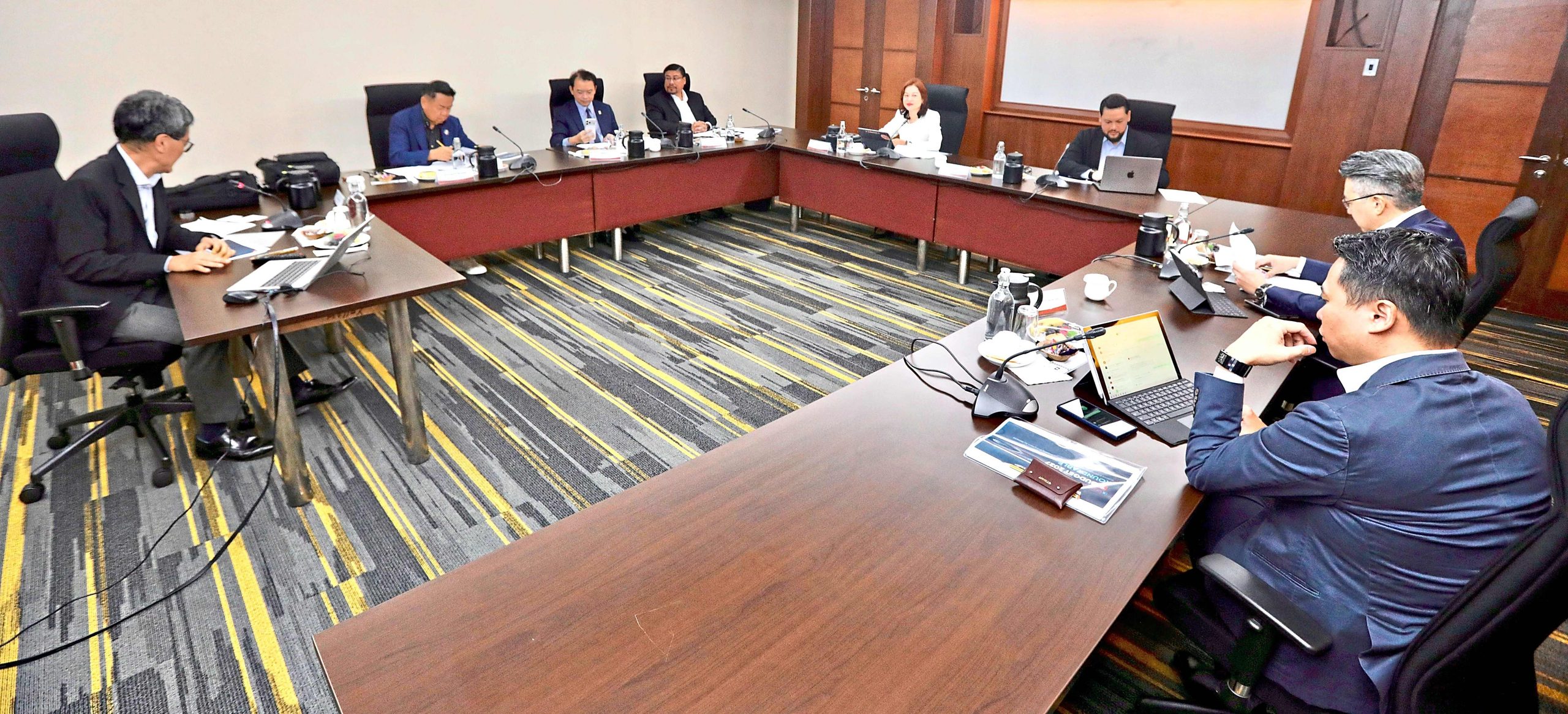
TheStarProperty Budget 2027 Roundtableinvolved an extensive nationwide pre-roundtable survey before the main issues were discussed by the participating developer heads.
How the StarProperty Budget 2027 Roundtable helped shape the national agenda
When Malaysia tabled Budget 2027 in Parliament on Oct 9, the macroeconomic narrative appeared anchored by steady national performance: robust 6% gross domestic product growth in the second quarter of 2026, low unemployment, record investment figures and a managed fiscal deficit.
Yet beneath these top-line indicators lay an entrenched structural friction well known to the property fraternity. Household wage growth continued to lag property prices, developers wrestled with elevated input costs and compliance friction and thousands of young, gig-economy and informal-sector workers remained systematically locked out of end-financing.
Against this backdrop, the question of whether the private sector can meaningfully guide public fiscal policy has often been met with scepticism. Corporate wish lists submitted ahead of the annual budget frequently disappear into bureaucratic silos.
However, an evaluation of the fiscal measures announced in Budget 2027 alongside the executive submissions of the StarProperty Budget 2027 Roundtable proves that collaborative policy advocacy can yield direct results. By shifting the role of the media from passive post-budget reporting to proactive, data-led policy formulation, the roundtable served as an instrumental conduit between market reality and legislative action.
Moving from passive reporting to actionable governance
Now in its fourth consecutive year, the StarProperty Budget Roundtable, organised by Star Media Group (SMG) through StarProperty, represents an institutional anomaly in the Malaysian media landscape. Rather than merely reacting to Parliament announcements, SMG synthesised ground-level empirical data, gathered through an extensive nationwide pre-roundtable survey encompassing master developers across Peninsular Malaysia as well as the Sabah Housing and Real Estate Developers Association (Shareda) and the Sarawak Housing and Real Estate Developers’ Association (Sheda).
The resultant memorandum was submitted directly to the decision-makers holding the levers of national housing policy: the Ministry of Finance (MoF), received by Treasury Secretary-General Tan Sri Johan Mahmood Merican on August 26 and the Ministry of Housing and Local Government (KPKT), received by Minister Nga Kor Ming on September 1.
The seriousness with which the government treated this engagement was evident early on. During the handover, Nga publicly credited SMG as “the only media with a formal initiative that not only provides a problem statement but also suggestions and solutions,” while Johan stated candidly ahead of tabling: “I’m very confident that even within this memorandum that you submit, I’m sure we’ll be able to see at least a measure or two which would be relevant for Budget 2027.”
Budget 2027 proved Johan’s confidence justified. A comparative look across the six strategic pillars highlighted in SMG’s memorandum reveals that the government took clear cues from the industry’s data-backed recommendations.
Direct footprints in the fiscal blueprint
The six focal areas advanced by SMG group chief executive officer Chan Seng Fatt and chief operating officer Lydia Wang centred on housing affordability, urban livability, financing accessibility, demand-led urban planning, regulatory streamlining and regional infrastructure equity. When examining the core deliverables of Budget 2027, the fingerprints of these proposals are unmistakable.
1. Re-engineering end-financing for the non-fixed-income demographic
A primary pillar championed by the roundtable was the expansion of tailored financing accessibility and alternative credit assessment, specifically targeting young professionals and non-fixed-income earners. The industry repeatedly highlighted that conventional bank credit scoring penalises creditworthy buyers who lack formal monthly payslips.
Budget 2027 addressed this pain point directly:
The Housing Credit Guarantee Scheme (SJKP) received a substantial mandate, providing up to RM20bil in housing financing guarantees to assist 80,000 first-time buyers, explicitly targeted at self-employed and non-fixed-income individuals.
Complementing this, Bank Simpanan Nasional (BSN) and Agrobank were allocated RM270mil in dedicated financing for gig workers seeking to start enterprises or purchase their first homes.
By directly absorbing counterparty default risks via federal credit guarantees, the government addressed the exact credit accessibility bottleneck flagged by the roundtable survey.
2. Tiered transaction relief for first-time buyers
SMG’s memorandum advocated for targeted fiscal levers to improve home ownership access and contain transactional entry costs. Budget 2027 responded with a progressive, multi-year relief framework:
Home buyers entering into Sale and Purchase Agreements (SPAs) signed from 2027 through 2030 will receive a 100% full stamp duty exemption for properties priced up to RM500,000.
A 50% stamp duty exemption was instituted for homes priced between RM500,001 and RM750,000.
By locking in this relief until 2030, policymakers established the forward visibility and multi-year market certainty that developers and financial institutions require to plan long-term product launches.
3. Institutionalising rehabilitation and eradicating abandoned projects
One of the most consequential interventions in Budget 2027 was the full stamp duty exemption granted to both developers and buyers of abandoned housing projects from 2027 to 2030.
Rescuing sick or abandoned housing projects is notoriously unviable for white-knight developers due to legacy liabilities, statutory penalties and excessive transactional overheads. By stripping away stamp duty friction on these distressed sites, the government directly operationalised KPKT’s zero-sick-projects target by incentivising financially capable developers to step in and restore stalled supply chains.
4. Supply-side intervention: Public housing and prime land endowments
The roundtable stressed that affordability requires actions on both sides of the equation, improving buyer purchasing power while containing supply-side development costs.
Budget 2027 delivered on this through massive public capital injections:
RM1bil was committed directly to public housing under Program Residensi Rakyat (PRR) and Rumah Mesra Rakyat.
The state initiated high-density social engineering in the heart of Kuala Lumpur, planning at least 2,500 Rumah Madani units in Belfield, with 70% earmarked for Bumiputera purchasers.
In an unprecedented structural move, the government granted 50 acres of prime Kuala Lumpur land valued at RM1bil as a new endowment to Yayasan Pelaburan Bumiputra for Permodalan Nasional Bhd (PNB) to build affordable housing and advance Bumiputera economic participation—the first prime federal land endowment of its kind since 1981.
5. Long-horizon decarbonisation and green tech integration
Addressing the roundtable’s second pillar, namely urban livability, ESG-driven execution and transit integration, Budget 2027 extended green tax incentives to Dec 31, 2030. Companies investing in green technology projects, electric vehicle (EV) charging infrastructure and verified green assets for operational use remain eligible for up to 100% Investment Tax Allowances (ITA), giving property players commercial incentives to decarbonise the built environment.
Validating the People-Private-Public Partnership Model
The alignment between the StarProperty Budget 2027 Memorandum and the fiscal policies enacted demonstrates that the roundtable served as an essential operational sounding board for Putrajaya.
As Nga pointed out during the memorandum handover, affordability cannot remain a static, one-size-fits-all formula. “Previously, affordable housing had a fixed price of RM300,000 but how can a house in Bukit Bintang be equivalent in price to a house in Kuala Krai, Kelantan?” he asked. The memorandum’s data-driven call to move toward localised, median-income analytics provided both ministries with private-sector backing to shift toward demand-led urban planning.
Equally, by bringing Sabah and Sarawak developers directly to the Treasury table, the roundtable forced federal planners to consider regional infrastructure readiness alongside Peninsular fiscal measures.
At the end of the day, did the StarProperty Budget 2027 Roundtable help the government plan the budget? The empirical answer is yes.
When private-sector advocacy is anchored in rigorous ground-level surveys rather than self-serving lobbying, policymakers listen. By consolidating the operational friction points of architects, master builders and planners into concise policy solutions, Star Media Group successfully converted market insight into federal policy.
From billions in credit guarantees for gig-economy workers to decisive tax relief on abandoned project rehabilitation, Budget 2027 proves that proactive media platforms can serve as vital architects of national economic resilience.
Eng Han Group, one of Malaysia’s established construction and property development groups, has topped out Tangen Residences, its 49-storey residential...
Residents are welcomed at the illuminated porte-cochère by dedicated concierge staff, setting the benchmark for branded residential hospitality. Decoding Malaysia’s...









POST YOUR COMMENTS