BOVAEP launches latest property management standards
From
/ 11/09/2026
(From left) Pamela, Abdul Razak and Ishak at the launch and Professional Convocation Ceremony. PETALING JAYA: The Board of Valuers,...
Read More

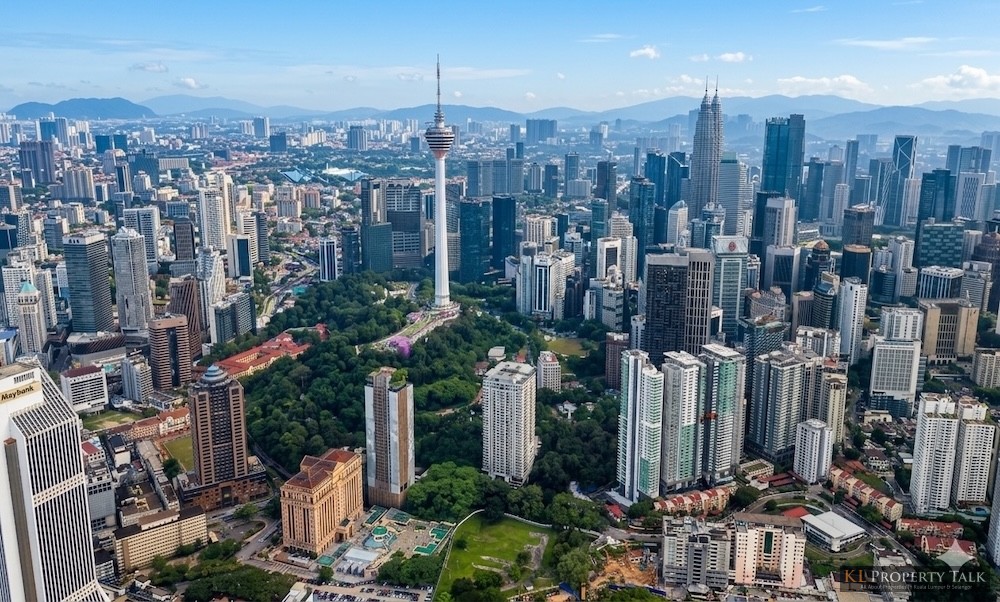
Malaysia’s property market held its ground in the first quarter of 2026, maintaining steady momentum across the residential, office, industrial, and data centre segments despite mounting global headwinds. According to JLL Malaysia, the market continues to be underpinned by resilient domestic demand, supply constraints in key asset classes, and sustained investor interest — even as geopolitical tensions, elevated energy costs, and supply chain risks temper overall sentiment.
Residential: Selective but Stable
Residential property, which accounts for 62% of total property transactions in Malaysia, remained broadly stable in early 2026. While transaction volume dipped slightly by 1.5%, transaction value rose 1.3%, pointing to a more selective but still liquid market. Kuala Lumpur recorded its strongest quarterly residential performance in four years in Q4 2025, with up to 4,734 transactions valued at RM5.8 billion — carrying positive sentiment into the new year.
Transaction activity in Q1 was relatively muted due to the festive season, which slowed deal flow across several sub-markets. Despite this, Mukim Batu retained its position as the Klang Valley’s top-performing residential submarket, with average apartment and condominium prices at RM611 psf, while service apartments in Mukim Kuala Lumpur led at RM758 psf.
Regionally, Johor continued to post year-on-year growth, albeit at a slower pace following two years of rapid expansion, while Penang remained stable with a flatter trajectory and signs of mild cooling after a stronger 2025. Notably, service apartment prices in Johor Bahru reached RM738 psf, overtaking both the Klang Valley at RM608 psf and Georgetown at RM695 psf.
Office: Flight to Quality Drives Recovery
The Kuala Lumpur office market recorded stronger occupancy, positive net absorption, and higher rents across all three major submarkets in Q1 2026. Occupancy in the city centre rose to 82.5%, KL fringe continued to lead at 93.5%, and decentralised areas improved to 78.3%. Average achievable rents rose across the board, with city centre offices averaging RM7.45 psf per month, KL fringe at RM6.75 psf, and decentralised locations at RM5.26 psf.
A clear “flight to quality” trend is emerging, with occupiers increasingly prioritising newer, greener, and better-connected buildings that support talent retention, operational efficiency, and ESG targets. Green-certified offices are commanding rental premiums of around 17%, with premium Grade A green buildings achieving average rents of RM10.47 psf per month — nearly double that of older non-green offices at around RM5.70 psf. The widening gap between premium and ageing stock is creating growing pressure on landlords to pursue asset enhancement and ESG upgrades or risk long-term obsolescence.
Industrial & Data Centres: Structural Tailwinds
The industrial and logistics sector remained firm, benefiting from the broader China-plus-X manufacturing shift that continues to position Malaysia as a preferred destination for supply chain diversification. Demand was strongest in electrical and electronics, logistics, pharmaceuticals, automotive, and medical manufacturing, with Johor seeing increased activity linked to cross-border logistics and data centre supply chains.
Data centres stood out as the fastest-growing segment. Operational capacity is expected to more than double from 900 megawatts at end-2025 to 2,055 megawatts by end-2026, driven by demand from artificial intelligence, cloud computing, 5G, and big data. Johor remains the primary growth engine, buoyed by its proximity to Singapore and cost competitiveness, while Greater Kuala Lumpur — led by Cyberjaya and northern Klang Valley — continues to strengthen as a secondary hub.
Looking ahead, JLL expects Malaysia’s property market to remain cautiously resilient throughout 2026, supported by diversified demand and stronger structural fundamentals. However, developers and investors are likely to stay selective amid higher costs and ongoing global volatility — making asset quality, location, and sustainability credentials increasingly important differentiators in the market.






POST YOUR COMMENTS