PETALING JAYA: Property developers are absorbing part of the higher construction costs as they seek to keep selling prices within buyers’ affordability levels, with 90% of respondents to the Real Estate and Housing Developers’ Association Malaysia (Rehda) Property Industry Survey 1H 2026 reporting an average 13% increase in construction costs between March and June.
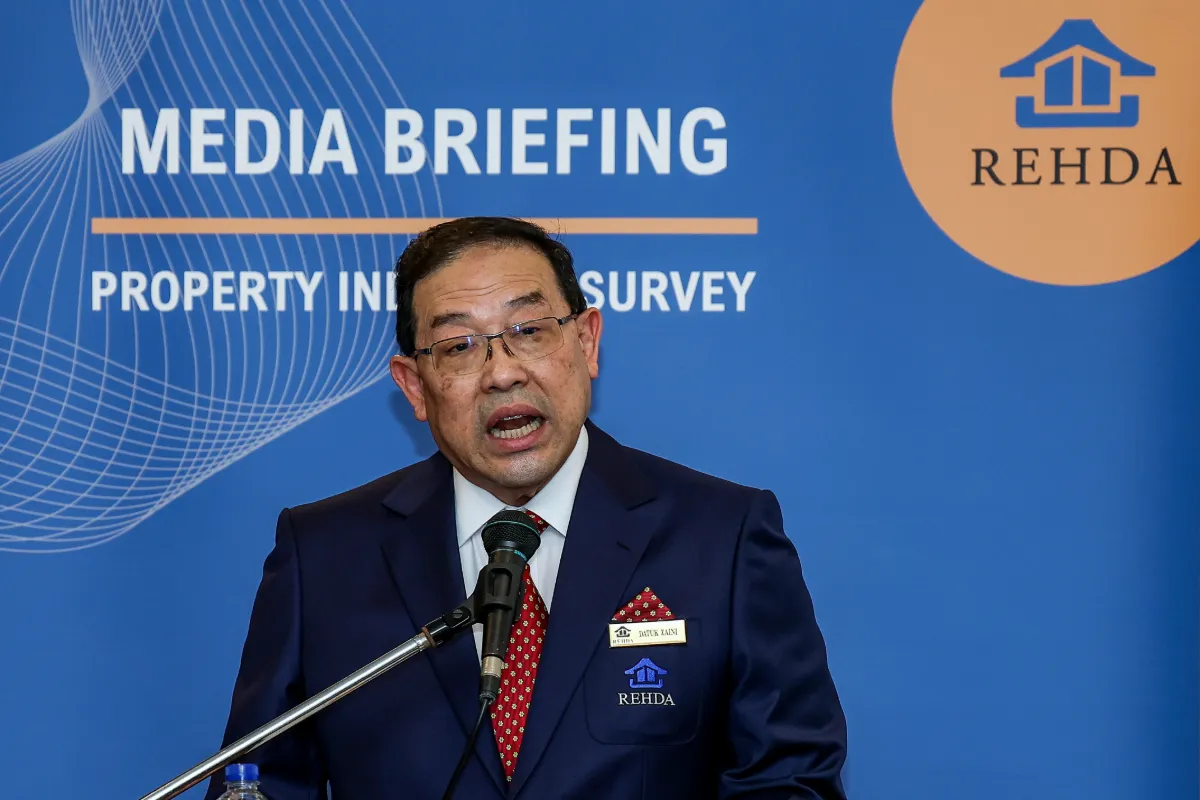
Rehda president Datuk Zaini Yusoff said the sharp increase in construction costs had been driven mainly by rising fuel prices and geopolitical uncertainties, although the impact varied depending on the type of construction work.
“Because of the Middle East crisis, a lot of diesel-related products like bitumen have increased in price,” he said during a briefing on the survey today.
Zaini also disclosed that earthworks and infrastructure works had experienced cost increases of about 20% to 24%, while the increase for normal building works could be as low as 3% to 5%.
“For ongoing contracts, they should be able to complete within budget, with a slight increase. Probably they have about 3% or 5% contingency built into the contract itself,” he noted.
Zaini said the sharper cost increases were more likely to affect newly awarded contracts, as contractors had already factored in some of the higher costs when tendering for new projects.
The survey found that 81% of respondents reported an increase in their overall cost of doing business in first-half 2026 (H1’26), while 90% reported an average 13% increase in construction costs between March and June.
The higher costs had prompted developers to take several measures to protect project viability, including reducing profit margins, renegotiating contracts, reviewing project specifications and designs, increasing selling prices where necessary and delaying planned launches.
Zaini said developers could not simply pass on the full increase in construction costs to buyers as higher selling prices could result in more unsold properties.
“When we want to launch a project, we’ll definitely take the cost increase into consideration. We’ll do value engineering and revise the design because the most important thing is to sell whatever market demand,” he added.
“If you sell higher, then there will be a lot of unsold stock. If you were over-zealous in terms of your pricing, definitely you won’t be able to sell.”
Developers were therefore prepared to absorb some of the additional costs through lower profit margins to ensure projects remained viable and could be completed, Zaini said.
“As far as the contractor is concerned, normally when they tender, they will absorb certain price increases. They will anticipate before they even tender,” he said, adding that developers also had to ensure contractors remained financially viable, particularly for projects already under construction.
“We don’t want the contractor to fail and the project is not completed. So it will be bad for the industry. So the developer also will take some cut in terms of profits, and then just finish up the project.”
Despite the cost pressures and geopolitical uncertainty, developers have not significantly reduced their supply pipeline.
The survey found that developers launched almost the same number of units in H1’26 as in H2’25, with only seven fewer units recorded between the two periods.
However, the pipeline is expected to become more cautious in the second half of the year, with only 37% of respondents planning new launches in second-half 2026, involving 18,696 units.
This means 63% of respondents do not have new launches planned for the second half of the year.
Zaini said the cautious approach reflected continued uncertainty over geopolitical developments and the broader economic outlook, but developers could not simply stop supplying homes because demand for housing remained.
He added that developers would continue to offer homes across different price segments because demand remained present among different categories of buyers.
Zaini cited the Klang Valley as an example, saying buyers generally preferred landed properties over strata developments, but prices of landed homes in some areas had moved beyond their affordability range.
He said terrace houses in Puchong were selling for about RM1.2 million to RM1.3 million, while developer prices for terrace houses in Bandar Tun Razak could reach about RM1.7 million.
By comparison, terrace houses in Klang could still be obtained for about RM700,000 to RM800,000.
“I think the buying preference now is about RM600,000 to RM700,000 or maximum maybe RM800,000, so that they look elsewhere,” Zaini said.
He also pointed to differences between property segments, citing a recent SP Setia project in Eco Park priced at RM3 million to RM4 million that was fully taken up, while take-up on Penang Island remained slow.
He attributed the weaker Penang market partly to high land costs, which limited developers’ ability to reduce selling prices.
Zaini said developers were cautiously optimistic about the first half of 2027, although geopolitical uncertainty remained a key risk.









POST YOUR COMMENTS