High-tech hubs, GreenRE workforce housing and multi-storey designs point to a changing industrial property landscape.
By Pavither Kaur
Malaysia’s industrial property market is changing shape. For decades, the market relied on standard single-storey brick-and-mortar factories and basic storage warehouses. Today, those traditional layouts are increasingly being replaced by automated facilities, multi-storey industrial buildings and greener developments designed around the needs of a more digital economy.
A review of industrial project launches by StarProperty in late 2025 and 2026 points to a noticeable change in what developers are putting on the market, as businesses respond to shifting global supply chains, rising costs and tighter sustainability requirements.
The growth of the digital economy, alongside increasingly demanding environmental, social and governance (ESG) requirements, is also changing what occupiers expect from industrial space.
Developers are responding with more specialised, built-to-suit facilities, alongside the infrastructure and financing needed to support them.
Smarter logistics infrastructure
Beyond digital data platforms, logistics infrastructure is getting high-tech upgrades to tackle rising operational costs and tight land supply. In December 2025, Sime Darby Property Bhd (SDP) and Mydin Mohamed Holdings Bhd (MYDIN) broke ground on a RM450mil fully automated distribution centre at the City of Elmina. Spanning 19.0 acres of freehold land with a 786,000 sq ft built-up area, the facility operates under a Built-to-Suit to Lease (BTSL) framework anchored by a 15-year lease.
Equipped with an advanced Automated Storage and Retrieval System (ASRS), the facility is engineered to boost throughput capacity by 240% and pallet storage by 36% while cutting labour requirements by more than half.
For MYDIN managing director Datuk Wira Ameer Ali Mydin, upgrading physical infrastructure is an operational necessity. In a press statement, he noted: “We view this strategic and timely investment in SDP’s City of Elmina as a significant enabler, allowing MYDIN to upscale boldly and innovatively with cutting-edge technology. The expansion will also drive talent development and upskilling. As a result, we are elevating our role as a key player in Malaysia’s competitive retail and supply chain ecosystem while serving our customers more efficiently and rapidly.”
Directly connected via major expressways including the North-South Expressway (NSE), Guthrie Corridor Expressway (GCE), LATAR, DASH and NKVE—the hub highlights how next-generation automated logistics facilities become more sophisticated.
Greener financing
This shift is also being reflected in how industrial and digital infrastructure is financed. SDP’s subsidiary, Sime Darby Property NEV (Holdings) Sdn Bhd, established a historic RM2.60bil Sukuk Programme to support its New Economy Venture (NEV) platform. The programme features the world’s first Green Sukuk dedicated to financing energy-efficient hyperscale data centre developments in Elmina Business Park, backed by an independent Gold rating from MARC Solutions Sdn Bhd for its alignment with green finance standards.
The hyperscale data centre development is secured by a 20-year long-term lease with a multinational technology company. Highlighting this financial structure, SDP group managing director and chief executive officer Datuk Seri Azmir Merican said: “We are the first developer in Malaysia to bridge Sukuk financing with an institutional real estate private equity structure, supported by a Gold-graded Green Finance Framework that reinforces our commitment to sustainable growth and disciplined capital management.”
The financing structure reflects the growing overlap between industrial property, digital infrastructure and institutional investment.
Going vertical
Urban land is getting scarce and prices in prime metropolitan hubs are rising. That is pushing industrial development upwards, particularly in established urban locations where land is limited. In Petaling Jaya, Chin Hin Group Property (CHGP) previewed The NeX in Kota Damansara, a 9-storey industrial development featuring an estimated gross development value (GDV) of RM449mil on a 4-acre site.
Built for modern entrepreneurs and creative enterprises, The NeX pairs flexible industrial layouts (ranging from 2,153 sq ft to 5,285 sq ft) with lifestyle amenities, including two pickleball courts, a fully equipped gymnasium, a garden terrace and a 1,000-capacity multipurpose hall. Operationally, the multi-storey structure handles heavy transport cleanly: the ground floor accommodates 10-tonne vehicles while an internal ramp system serves up to Level 8 for loads up to 5 tonnes. Flexibility is supported by 6.8-metre ceiling heights and 4.5-metre entrance roller shutters.
Chin Hin Group Property group chief executive officer Chang Tze Yoong explained the vision behind challenging standard factory designs: “As a new blueprint for modern enterprise, the development was conceived with a clear belief that the future of industrial spaces lies in the convergence of work, business and lifestyle for a new generation of innovators. This vision challenges conventional industrial typologies, redefining them as dynamic ecosystems where innovation, collaboration and enterprise thrive without boundaries.”
Setting higher ESG standards
As multinational corporations tighten their Scope 1, 2 and 3 emission targets, ESG compliance considerations are increasingly influencing industrial leasing decisions. ISP Group of Companies has focused heavily on this area, securing GreenRE certifications across its portfolio of logistics hubs and Purpose-Built Workers Accommodations (PBWA).
Alongside greenfield projects, the group is also applying the same approach to existing properties, upgrading brownfield assets rather than focusing solely on new developments. Silver-certified retrofits at ISP Astute Warehouse, ISP Vista Warehouse and ISP Harvest demonstrate that older facilities can meet modern environmental standards. At the same time, its flagship 10-storey ISP Home Kapar facility achieved GreenRE Gold Certification, housing 3,780 beds across 210 units in full compliance with Act 446 workforce housing regulations.
ISP Holding Sdn Bhd founder and group chief executive officer Eric Ng highlighted the market’s rising bar: “When we started ISP, we saw a gap between what Malaysia’s industrial workforce deserved and what the market was offering. Green certification is not a badge for us; it is how we hold ourselves to account. Every property we manage should perform well for the people in it and for the environment around it. Malaysia is moving towards higher standards, greener buildings and greater accountability for how workers live and work. We intend to be ahead of that curve, not catching up to it.”
Empowering more SMEs
While multinational technology companies expand their hyperscale facilities, local Small and Medium Enterprises (SMEs) remain an important part of Malaysia’s industrial base. To help SMEs navigate the financing required to move into higher-spec industrial facilities, NCT Group of Companies partnered with RHB Bank Bhd and Syarikat Jaminan Pembiayaan Perniagaan Bhd (SJPP) on a national seminar series focused on financial solutions and government guarantee schemes.
The initiative connects financial tools directly with specialised industrial locations, such as the NCT Smart Industrial Park (NSIP), Malaysia’s first Managed Industrial Park within the Integrated Development Region in South Selangor (IDRISS) and NCT Innosphere (NIS) in Bukit Kayu Hitam, Kedah.
NCT Group of Companies general manager of sales and marketing Simon Chan pointed to the need for practical support: “As Malaysia advances its industrial transformation agenda, SMEs remain an important engine of national resilience. Facilitating their progress requires a strong business ecosystem which is precisely the purpose of our collaboration with RHB Bank and SJPP. As a developer working closely with many SMEs, we understand the financial and operational challenges businesses face as they grow.”
The same emphasis on supporting industrial growth is also evident along northern Peninsular Malaysia’s key development corridors. Setia Awan Land recently opened its sales gallery for the 447-acre Tanjong Malim Hi-Tech Park. Positioned adjacent to Proton City within the Automotive High-Tech Valley (AHTV), the park combines industrial land lots with integrated commercial shoplots (Ionera) to serve high-value manufacturing supply chains.
A brighter industrial real estate horizon
The industrial property market is therefore becoming more specialised. Automation is changing the way logistics facilities operate while rising land costs are pushing some developers towards multi-storey formats. Whether through Green Sukuk capital structures, automated ASRS logistics hubs, vertical industrial layouts, Act 446-compliant green workforce housing or structured SME financing, Malaysia’s developers are building more than industrial space. They are putting in place the infrastructure needed to support a higher-value, more technology-driven and sustainable economy.
Taken together, these developments point to an industrial property sector shaped as much by the needs of businesses and their workers as by the land beneath them. For developers, the challenge will be to keep pace with changing technology, sustainability requirements and the evolving needs of the companies that occupy these spaces.
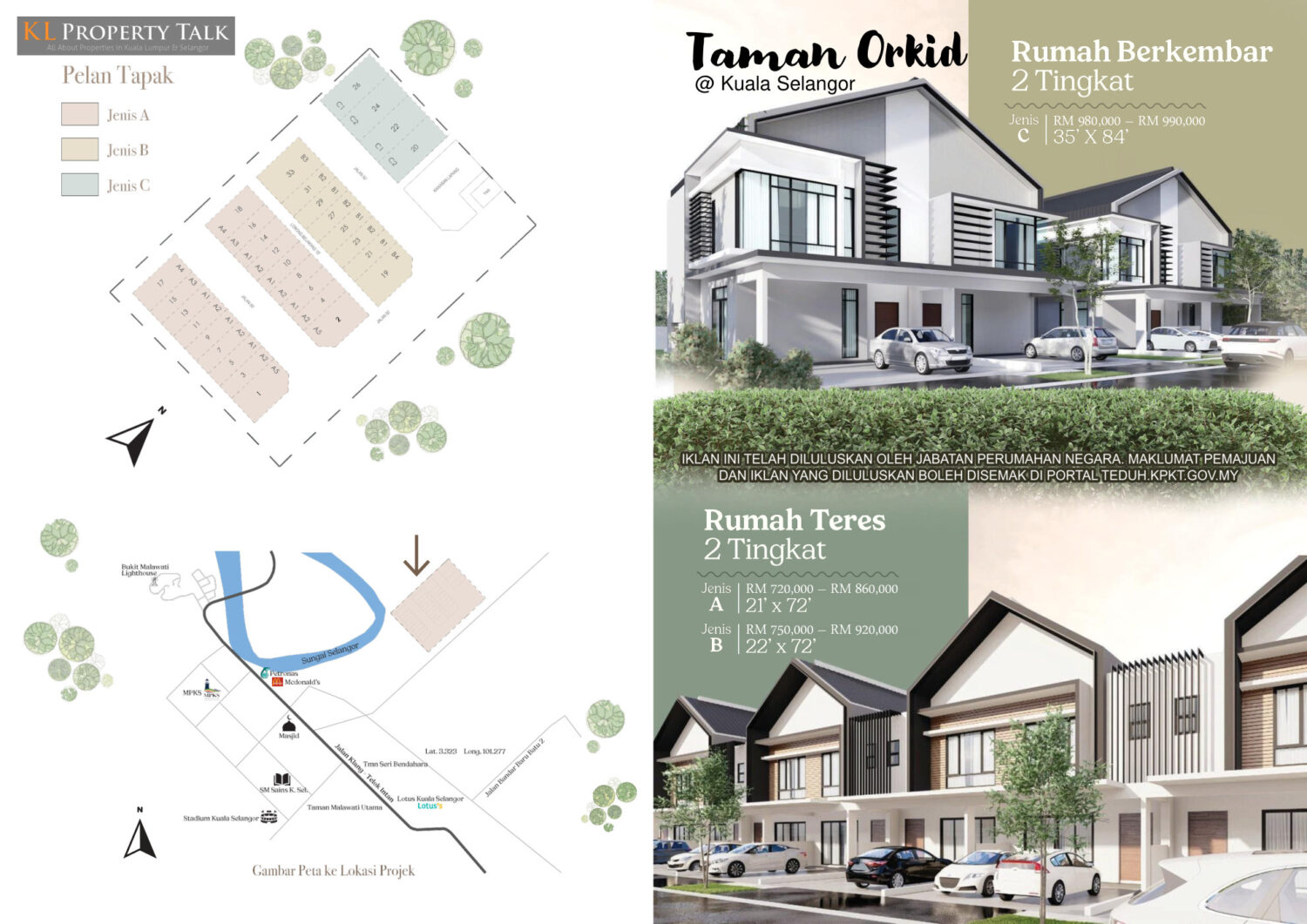
Taman Orkid is a residential development in Kuala Selangor comprising two-storey terrace houses and semi-detached homes. The development offers three...








POST YOUR COMMENTS