Property News
Occupancy momentum builds at TRX
Jan 26, 2026
Built to anchor Malaysia’s push to become a credible international financial centre, TRX is now recording sustained tenant demand, rising capital commitments and growing international visibility
by AKMAR ANNUAR
KUALA Lumpur’s (KL) long-held ambition to stand alongside Asia’s recognised financial centres is beginning to find physical and institutional form at Tun Razak Exchange (TRX), as the district enters a phase defined less by aspiration and more by market validation.
Built to anchor Malaysia’s push to become a credible international financial centre (IFC), TRX is now recording sustained tenant demand, rising capital commitments and growing international visibility, placing it at the heart of the country’s financial competitiveness narrative.
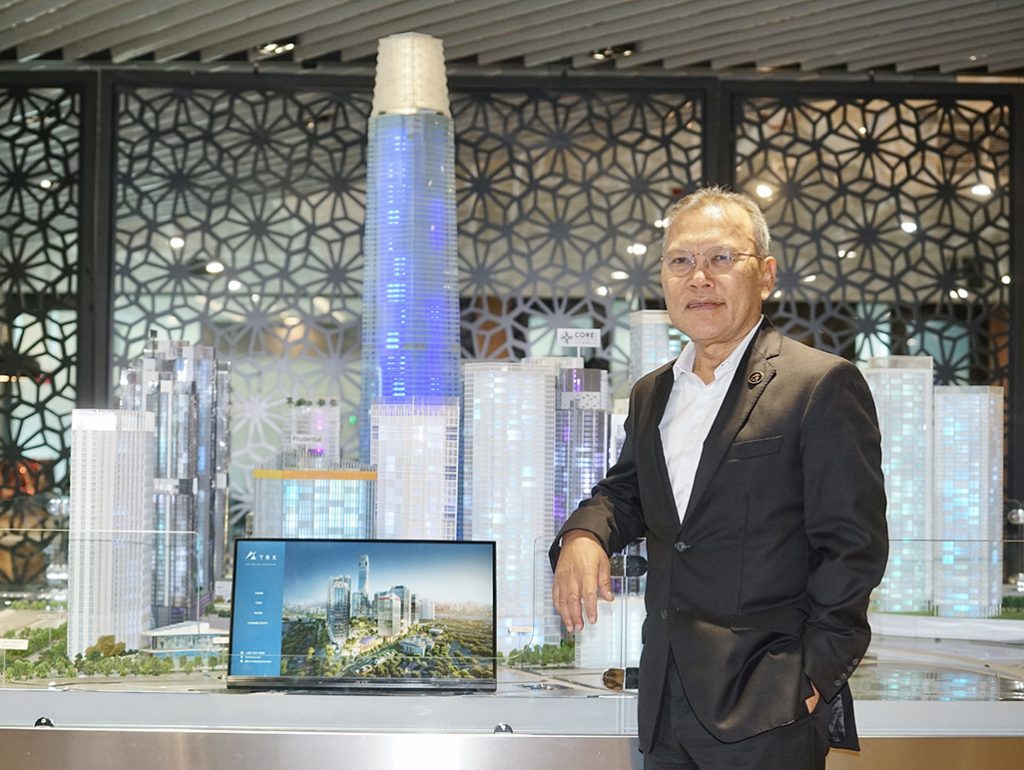
TRX City Sdn Bhd CEO Datuk Azmar Talib (picture) said the district’s progress is being measured not only through occupancy and investment figures, but also through the structural shifts it is catalysing across Malaysia’s financial ecosystem.
“We measure TRX’s success on two fronts: Tangible market performance and the structural strategic shifts it is driving across Malaysia’s financial ecosystem,” he said in an email interview with The Malaysian Reserve (TMR).
TRX City, the master developer of the 70-acre (28.33ha) TRX, is wholly owned by the Ministry of Finance (MOF).
The Exchange TRX mall has evolved into a retail destination, supported by international luxury brands, regional lifestyle concepts and flagship dining and entertainment operator (Source: Media Mulia)
Market Response
On the ground, the market response has been decisive, with the district now recording more than 80% occupancy based on net lettable area, while its landmark tower, Exchange 106, houses about 90% international tenants. They include global banks, institutional investors, centres of excellence and multinational firms, who have chosen TRX as their regional headquarters.
That confidence is increasingly visible beyond the precinct itself, with KL climbing to 45th place in the Global Financial Centres Index (GFCI), a ranking published by a London-based think tank and a Shenzhen, China, based institute. The nation’s financial technolog y (fintech) competitiveness ranking improved to 51st from 54th.
“We are now seeing stronger interest from fund managers, insurance providers, fintech players and digital financial services companies that previously had limited operational presence in Malaysia,” said Azmar.
Looking at the bigger picture, he said TRX’s progress aligns closely with national policy priorities under the 13th Malaysia Plan (MP13) and Budget 2026, both of which place renewed emphasis on high-value investment, financial services growth and talent mobility.
The challenge it to deepen the presence of global asset managers, attract more cross-border fintech and digital finance firms, enhance regulatory harmonisation for international products and sustain reforms that improve Malaysia’s overall business competitiveness.
While acknowledging these gaps, he argued that KL already has strong fundamentals, including connectivity, talent availability and rising interest from firms seeking regional treasury and operational hubs.
“TRX will continue to be the nucleus in driving these shifts, and consistent policy support will accelerate our trajectory,” he said.
Capital, Scale and Confidence
From an investment standpoint, TRX’s scale reflects the ambition behind the project.
The district carries a gross development value (GDV) of about RM40 billion across office, retail, residential and hospitality assets, underpinned by a balanced mix of domestic and foreign capital. To date, TRX has attracted more than RM8 billion in investments and hosts over 20,000 professionals, a figure expected to double to 40,000 upon full development.
“This concentration of highvalue activities is a strong indicator of the district’s maturity and global pull,” he said.
Foreign participation remains particularly strong in the office and retail segments. Azmar said this diversified capital structure has strengthened TRX’s long-term resilience and risk profile, supporting positive return expectations as the district continues to mature.
“Our projected returns remain positive based on strong indicators: Rising footfall at The Exchange TRX, increasing demand from multinational financial tenants and capital appreciation across completed parcels,” he said.
TRX meets the highest ESG and international green certification (Bloomberg)
Reframing Value in a Post-pandemic Market
Securing major tenants in the post-pandemic environment required a shift in strateg y, as corporations reassessed their real estate footprints and raised expectations around stability, talent access and digital resilience.
“The environment was cautious, and expansion decisions were slower across the board,” Azmar said.
TRX’s response was to reposition itself not merely as a real estate development, but as Malaysia’s IFC — a platform designed for regional scaling, regulatory proximity and ecosystem effects.
“We shifted the conversation away from space and into value,” he added, noting that TRX met the highest environmental, social and governance (ESG) and international green certification standards.
Operational advantages such as resilient digital infrastructure, integrated mobility and long-term cost efficiencies were also emphasised, but Azmar said the true competitive edge lay in the ecosystem itself.
“Global players wanted to be near regulators, professional services, fintech innovators and their financial peers,” he said.
TRX also adopted a more con-sultative engagement model, co-creating solutions with potential tenants through future-proofed cyber security features, hybrid-ready environments and phased growth pathways.
“That level of responsiveness provided certainty at a time when global decision-making cycles were volatile,” he said.
Tenancy Mix and Ecosystem Curation
Today, TRX’s tenant mix reflects its deliberate ecosystem-building approach. The district is anchored by international and regional financial institutions including HSBC, Singapore-based leader in digital payments and fintech provider Ant International, insurer Prudential, Japanese financial institution Mitsubishi UFJ Financial Group Inc (MUFG), KAF Group of Cos, Principal Asset Management Bhd and Bin Zayed International (BZI), alongside professinal services firms such as PwC Malaysia.
The Exchange TRX mall has evolved into a retail destination in its own right, supported by international luxury brands, regional lifestyle concepts and flagship dining and entertainment operators.
Looking ahead, Azmar said TRX is targeting partners who reinforce its long-term positioning as Malaysia’s IFC, including global financial institutions, international asset managers, fintech and technology firms, luxury hospitality operators and premium mixed-use developers.
Educational anchors such as Monash University Malaysia are also strategically important, he said, as they integrate talent development, research and industry linkages directly into the district.
“The goal is deliberate: To curate an ecosystem that combines financial depth, innovation, talent and lifestyle,” he said.
Local vs Foreign Demand
Demand from local and foreign tenants remains balanced, though driven by different strategic motivations.
Local institutions view TRX as a natural base to consolidate operations and modernise facilities, while foreign tenants are drawn by world-class infrastructure, regulatory readiness and cost advantages relative to other regional hubs.
“What we are seeing now is a shift from short-term interest to long-term commitment,” Azmar said.
He said TRX has strengthened KL’s brand equity as a financial hub, with firms increasingly planning multi-year expansion strategies anchored in Malaysia’s talent strength and competitive business environment.
Legacy Issues and Governance
Addressing concerns linked to TRX’s early association with 1Malaysia Development Bhd (1MDB), Azmar said the district has been built on a foundation of integrity, strong governance and institutionalised processes from the outset.
“The strongest validation comes from the market itself,” he said, pointing to growing participation from global banks, institutional investors and multinational corporations.
The state-owned 1MDB was at the centre of a massive global corruption scandal involving alleged embezzlement, money laundering and theft of billions of dollars by top officials, including then-Prime Minister (PM) Datuk Seri Mohd Najib Razak.
Tall buildings signal ambition, but they do not compensate for rigid or inconsistent policymaking, says Adli (Pic courtesy of Adli Amirullah)
What Economists Say
While TRX’s physical scale and commercial momentum have strengthened KL’s financial credentials, economists caution that infrastructure alone cannot define investor confidence or elevate a city into the top tier of global financial centres.
Public policy start-up Wawasanex co-founder and chief economist Adli Amirullah said by concentrating financial institutions, professional services and support infrastructure within a single district, TRX reduces friction in how firms interact, collaborate and scale — an important structural improvement for a market that has historically been spread across multiple locations.
“An IFC-style development can help cluster institutions, talent and capital, which does matter, especially in a fragmented system,” he told TMR.
However, Adli cautioned that investor confidence is ultimately anchored less in physical infrastructure and more in whether policy outcomes are predictable over time, particularly in an era where finance and technolog y are increasingly intertwined.
He said this challenge becomes more pronounced as digital finance, fintech and platform-based models expand, requiring regulators to strike a careful balance between innovation and oversight without introducing uncertainty that deters long-term capital.
“To put it bluntly, tall buildings signal ambition, but they do not compensate for rigid or inconsistent policymaking,” he said.
He added that long-term investors assess markets based on their ability to anticipate how policies will evolve, how regulations will be applied in practice and how institutions respond during periods of financial stress.
From a market perspective, however, property consultants point to TRX’s leasing performance as evidence that occupiers are already voting with their balance sheets.
A Knight Frank Malaysia’s report noted that TRX’s occupancy rate was expected to close at around 78% by end-2025, broadly comparable to the 72% occupancy level of Grade A offices in KL city overall.
Within the precinct, Exchange 106 has achieved committed occupancy of about 75%, reflecting sustained demand for premium-grade, well-located assets despite a cautious global office market.
Teh believes that TRX’s positioning as an international-level financial district enhances its competitiveness (Pic courtesy of Knight Frank)
“This performance indicates that flight-to-quality remains a major driver of tenant decision-making heading into 2026,” said its senior ED for office strategy and solutions Teh Young Khean.
He added that TRX’s positioning as an international-level financial district, supported by marquee incentives for financial institutions and regulated industries, enhances its competitiveness.
TRX now accounts for roughly 20% of KL’s Prime A and Grade A office stock yet has contributed almost half of annual market absorption since 2021 — underscoring its role as one of the city’s most active demand drivers.
For economists, the contrast between these perspectives is instructive. TRX’s success in
attracting tenants and capital suggests that KL’s fundamentals — talent availability, cost competitiveness and institutional depth — are increasingly compelling.
At the same time, sustaining that momentum will depend on whether policy clarity, regulatory agility and institutional credibility evolve in step with the physical ecosystem now taking shape.
In that sense, TRX may not be the endpoint of Malaysia’s financial ambition, but rather a stress test of whether the countr y’s broader policy environment can keep pace with the scale of its aspirations.
Anchoring the Next Decade
Moving forward, Azmar said the next phase of TRX’s development will focus on deepening its role as the nucleus of Malaysia’s financial centre by activating a richer ecosystem of institutions, talent and innovation.
“We see TRX as a neutral, highly connected hub at the heart of ASEAN,” he said.
He said this direction aligns with national priorities under MP13, where finance is recognised as a high-value, high-growth sector alongside digital and high-tech industries.
“Ultimately, our ambition is clear: TRX will be a strategic engine of Malaysia’s financial competitiveness,” Azmar concluded.
This article first appeared in The Malaysian Reserve weekly print edition
Source: The Malaysia Reserve








POST YOUR COMMENTS