CEO Series 2026: Real Assets Central to Malaysia’s Growth Agenda, Says Finance Minister II
Jan 16, 2026
Malaysia’s economic reform agenda has entered what the government describes as a “year of execution”, with real assets expected to play a central role in translating policy direction into tangible outcomes for businesses and communities.
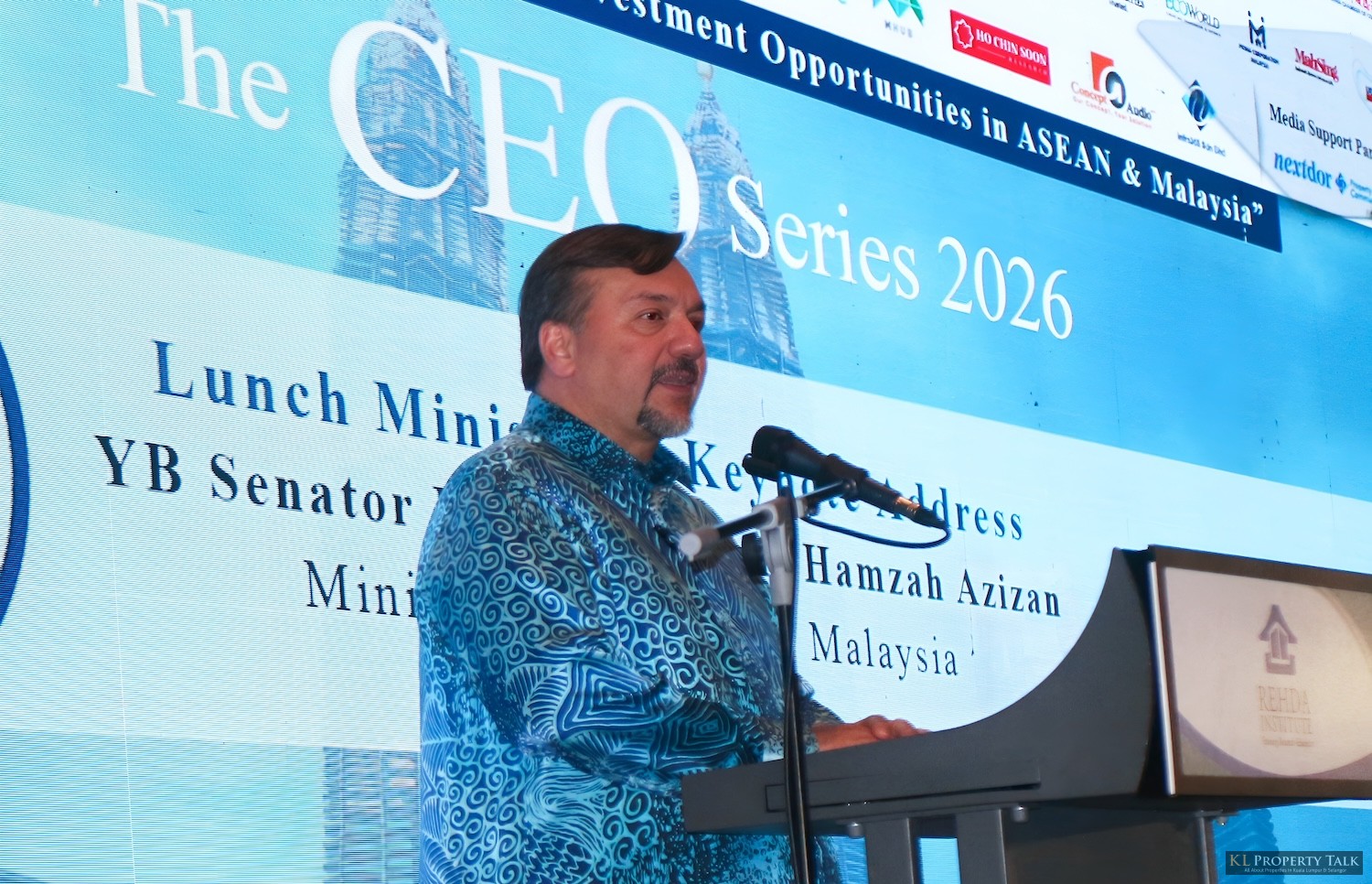
Speaking at the CEO Series 2026 in Petaling Jaya, Minister of Finance II YB Senator Datuk Seri Amir Hamzah Azizan said 2026 marks a shift from policy design to implementation under the Ekonomi MADANI framework, following two years of institutional alignment and reform groundwork
While macroeconomic indicators and fiscal frameworks remain important, he noted that the true pulse of the economy is reflected in physical progress on the ground — including housing, industrial developments, infrastructure and integrated urban ecosystems that support productivity and livability.
Real assets as the bridge between policy and people
According to the minister, real assets form the bridge between policy crafted in Putrajaya and prosperity experienced by households, students and businesses across the country. They provide the foundation that makes national ambition credible and sustainable.
He cited international examples such as South Korea’s Pangyo Techno Valley and experience-led tourism districts in China, where coordinated planning, talent integration and place-making transformed land into resilient, income-generating ecosystems.
In Malaysia, this approach is reflected in the Johor–Singapore Special Economic Zone (JS-SEZ), described as a living, cross-border ecosystem that combines Johor’s industrial strengths with Singapore’s financial depth and global connectivity. While centred in southern Malaysia, the model offers lessons for other growth regions, including Penang, particularly in advanced manufacturing, data-ready land banks and mixed-use developments.
Long-term clarity under the 13th Malaysia Plan
The minister said the Thirteenth Malaysia Plan (13MP) provides the strategic roadmap for a more resilient, high-value and inclusive economy. The government’s role, he stressed, is to ensure stability, clarity and confidence so that long-term investment decisions can be made with certainty.
A key initiative supporting this objective is the Government-Linked Enterprises Activation and Reform Programme (GEAR-uP), under which Government-Linked Investment Companies are expected to mobilise up to RM120 billion in domestic investments over the next five years. The focus, he said, is on catalytic capital that anchors high-growth and high-value industries in Malaysia, rather than short-term or transient investment.
Visit Malaysia Year 2026 and experience-led development
Looking ahead, the minister highlighted Visit Malaysia Year 2026 as a major economic opportunity, with national targets of 47 million visitors and RM329 billion in tourism receipts.
For the property and hospitality sectors, he said this represents a shift towards experience-led development, moving beyond a “rooms-first” approach. The rejuvenation of heritage and landmark sites — through initiatives such as Warisan Kuala Lumpur — aims to transform them into economically viable, resilient assets rather than static preservation projects.
This approach has implications for tourism-driven real estate, urban regeneration and mixed-use developments in established destinations such as Penang.
Talent as a pillar of sustainable growth
The speech also underscored human capital as a critical enabler of long-term economic resilience. The minister welcomed the launch of the REHDA Institute Youth Initiative (RIYI), which seeks to strengthen education–industry linkages through mentorship, exposure and skills development.
He said such initiatives reflect the Ekonomi MADANI principle of investing in people so that talent, innovation and opportunity remain anchored in Malaysia.
Shared responsibility
Concluding his address, the minister emphasised that while the government provides fiscal stability, strategic initiatives and enabling infrastructure, the responsibility to innovate and build enduring assets lies with industry leaders.
As Malaysia navigates global uncertainty and regional competition, the emphasis on real assets, long-term capital and talent development signals a policy direction focused on durability, quality and inclusive growth







POST YOUR COMMENTS