Property News
Greater KL’s public transport not failing but fragile, says Khazanah Research Institute
Dec 31, 2025
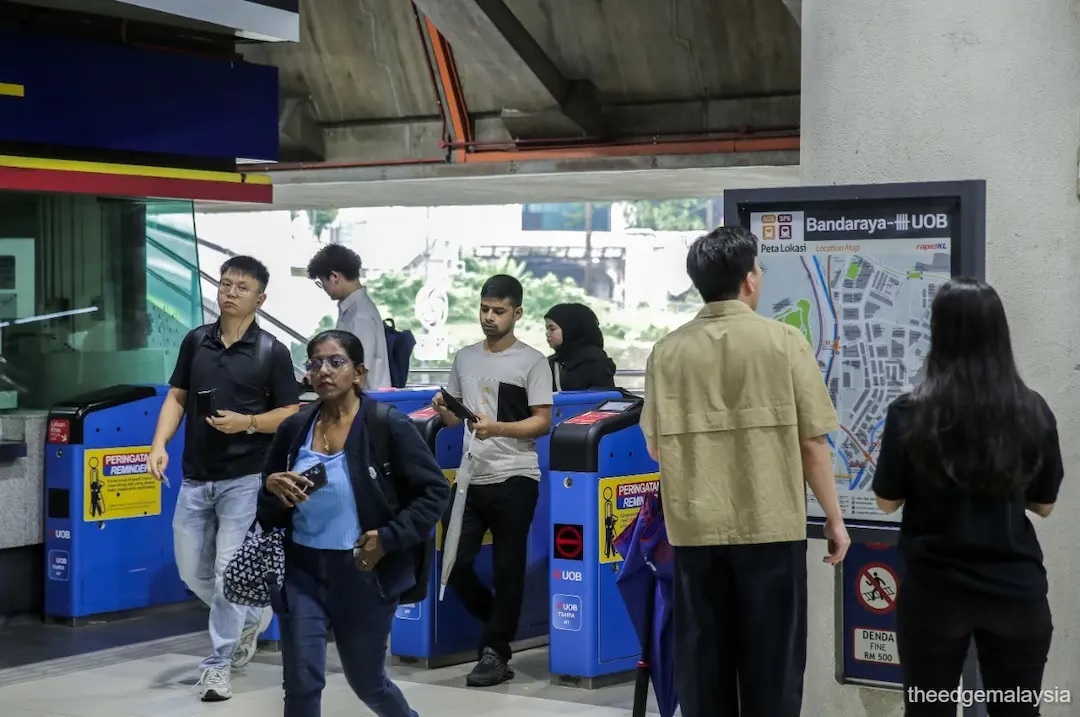
KUALA LUMPUR (Dec 31): Public transport in Greater Kuala Lumpur is often “good enough” under normal conditions but even small disruptions can quickly undermine commuter confidence, according to a study by the Khazanah Research Institute (KRI).
The study found that commuters do not reject public transport outright, nor does the problem amount to system failure. Instead, public transport use within the area is characterised by fragility, where commuters only engage with trains and buses conditionally—continuing usage as long as everyday frictions such as delays, safety concerns and discomfort remain within tolerable limits.
“Individually, these issues may seem minor. Together, they raise the effort, risk and uncertainty associated with using public transport,” KRI said in its research findings.
Commuters generally continue using public transport when frictions related to time, safety and comfort remain manageable. However, once these thresholds are exceeded, they tend to reassess the system as no longer workable for daily routines, the research found.
When reliability cannot be taken for granted, the rational response is often to abandon public transport in favour of private cars, even when trains or buses would otherwise be time-competitive, the house noted.
The findings are based on Phase 1 of KRI’s Greater Kuala Lumpur Mobilities study, which concludes that public transport usage is shaped not only by travel time but also by how predictable, legible and manageable the system feels in everyday conditions.
Malaysia has invested significantly in public transport infrastructure but the ridership growth in the country remains uneven, KRI noted. The house pointed to the huge expenditure needed on the mass rapid transit (MRT) network, where RM54.57 billion was invested to construct the MRT Kajang and MRT Putrajaya lines between March 2011 and December 2023.
It added that while public transport is intended to connect homes, workplaces and other places, uneven distribution of services across Greater Kuala Lumpur has resulted in unequal access.
Residents in well-served areas benefit from frequent services and walkable access to stations, while those in less connected areas face longer travel distances and less reliable connections.
These spatial disparities weaken overall system performance, as services in poorly served areas tend to have lower ridership and weaker farebox recovery, increasing reliance on subsidies and limiting scope for service improvements.
Unlock Malaysia’s shifting industrial map. Track where new housing is emerging as talents converge around I4.0 industrial parks across Peninsular Malaysia. Download the Industrial Special Report now.
Source: EdgeProp.my











POST YOUR COMMENTS