The Titans Who Built Malaysia’s Homes
From
/ 10/08/2026
A file photo of the late Tunku Abdul Rahman visiting the Federal Hotel in 1958 alongside the late Tan Sri...
Read More

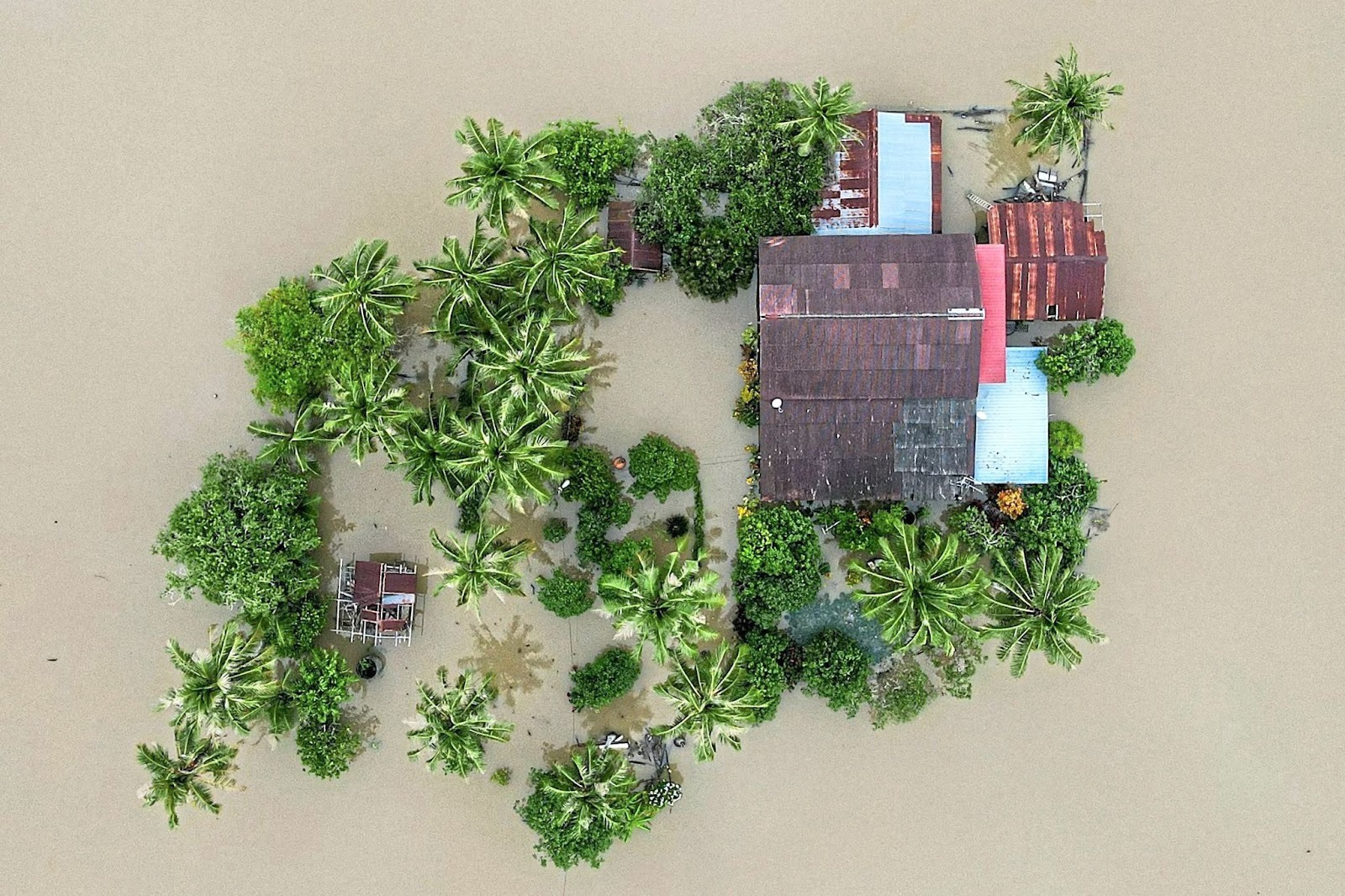
Rough monsoons and a rare cyclone leave damage worth billions
When flood waters finally recede, what remains is not just mud-streaked walls and warped floorboards. It is unease. While Malaysia is no stranger to seasonal flooding, in this year alone, the National Disaster Management Agency (NADMA) reports flooding across eight northern states: Kelantan, Perlis, Perak, Selangor, Kedah, Pulau Pinang, Terengganu and Pahang. This displaced 24,907 people (8,308 families) who had to seek shelter in 125 evacuation centres. Flooded estates and underground car parks in high-rise buildings underscored the scale of disruption.
The relentless monsoon weather is steadily eroding the landscape one hill at a time. Day by day, locations turn red on maps and get labelled disaster zones. Malaysians are displaced or lost, suffering damages to their properties. Yet, the phenomenon is continuing year on year despite flood mitigation efforts. So, is such climate risk no longer a rare occurrence but a dangerous normal?
This year will go down in the property books as the year of destruction. Whole housing estates situated on lower encampments or those sharing banks alongside rivers were submerged for days on end. As personal belongings converged with nature, access roads sank beneath muddy torrents of water. Stronger currents lifted vehicles, drifting them past their distressed owners. What was supposed to be a safe and secure asset was disillusioned, with damage going far beyond broken furniture.
What is worrying is that 2025 was not the wettest year Malaysia has ever seen. But it may have been the year when climate risk stopped feeling theoretical and started feeling personal.
The bigger picture
While heavy rainfall and stronger monsoon patterns played a central role, experts warn that nature alone cannot be blamed. The true story lies in the collision between extreme weather and decades of urban development that failed to account for it.
Rapid urbanisation has transformed floodplains into housing estates, cleared natural vegetation that once absorbed runoff and replaced permeable ground with concrete. In many fast-growing townships, drainage systems designed decades ago remain unchanged, despite higher-density developments and heavier rainfall patterns.
When building on flood-prone land, clearing hillsides and ignoring drainage capacity, can it be said that the disaster becomes partly man-made? This uncomfortable truth now sits at the heart of Malaysia’s property debate. But this scenario is not limited to just Malaysia. Across Southeast Asia, the scale is far larger. Indonesia saw over 700 deaths and 1.5 million people affected. Thailand recorded over 160 deaths and Vietnam suffered nearly 100 fatalities in November alone, with hundreds of thousands of homes flooded. Overall, the region experienced 15 to 16 million people affected, more than 2 million displaced and over RM21.5bil in economic and property losses.
Newer developments suffered
Perhaps the most striking feature of the 2025 floods was where the damage occurred. It was not confined to kampung areas or older neighbourhoods. Several newer townships that were marketed as modern, exclusive and well-planned also found themselves underwater.
Residents in some gated communities reported flood levels reaching ceilings. Landscaped parks became retention ponds overnight. Underground car parks in high-rise developments were completely submerged, destroying vehicles and electrical systems.
These were developments sold with promises of peace of mind, security and future-ready living. For many buyers, the experience felt like a betrayal. This has raised difficult questions. Were developers and planners fully transparent about flood risk? Were drainage and mitigation systems designed for realistic climate scenarios? And who bears responsibility when those systems fail?
Speaking of responsibility, it is worth noting the cost because beyond the physical destruction lies a quieter financial crisis. For homeowners, repair costs are only the beginning. Insurance may cover some damages but many policies exclude certain flood-related losses or come with complicated conditions.
More troubling is the effect on long-term property values. Flood-prone areas are now coming under greater scrutiny from buyers because the sheer number of affected properties, housing estates submerged, car parks flooded and access roads cut off highlights the rising financial and insurance risk. Observers within the industry note that properties in repeatedly affected zones may face slower appreciation or even declining demand.
Some homeowners now find themselves trapped. Maybe they are unable to sell at a fair price, yet are unable to afford relocation. For investors, the traditional assumption that property is always a safe, tangible asset has been shaken.
There is also a growing transparency gap. While some countries require mandatory flood-risk disclosures in property transactions, Malaysia’s system remains fragmented. Buyers may not always have access to comprehensive climate-risk information before committing to a purchase.
Regulatory issues
Malaysia does have building codes and planning guidelines designed to manage flood risk. The problem is not the absence of rules but enforcement, consistency and outdated assumptions.
Many standards are based on historical weather patterns that no longer reflect today’s climate reality. Drainage capacity designed for once-in-50-year storms is now being tested by rainfall events happening far more frequently.
Environmental experts also point to deforestation, hillside development and encroachment into wetlands as major contributors to disaster risk. These decisions are often driven by the pressure for faster, cheaper development, a trade-off that is now coming back to haunt both authorities and buyers. The 2025 disasters have exposed a regulatory system struggling to keep up with the pace and scale of climate change.
Shifting approaches
Developers have been adjusting their concepts because climate resilience is now a market expectation. Retention ponds, both large and small, better building designs, pavements that are permeable, green corridors and real-time flood monitoring systems are a few examples of current mitigation efforts that work. Buyers, however, are asking tougher and tougher questions because they want proof instead of promises that their invested properties will remain safe and secure.
Additionally, there is increasing pressure being placed on local councils recently, pushing authorities to integrate better climate modelling into approval processes and reducing reliance on historical data. Even banks and insurance agencies are increasingly factoring climate risk into their assessments. This could change the way financing flows in the entire ecosystem.
After decades and decades of warnings from nature itself, could 2026 finally be the starting year of reform? Experts say yes but only if actions are taken seriously once and for all. For example, they suggest that before buyers sign, any flood history and potential future risks to the property should be disclosed to earn trust and maintain relationships. Structural resilience is a priority as well, requiring it to be integrated into designs at the earliest stages.
With the global climate as unpredictable as it is, building and planning standards must be updated to reflect future rainfall instead of relying on past averages. What currently works may not be up to par in a few years and it is a common sentiment in the ever-evolving industry. Environmental protection should be consistently monitored as well, since forests, wetlands and natural drainage systems are nature’s own infrastructure.
Necessary questions
The floodwaters will fade from memory but what should not fade are the questions they leave behind. Why were homes built in places that could not withstand predictable extremes? Why were drainage systems allowed to lag behind urban ambition? Why were buyers asked to trust promises that the climate is now proving fragile?
Malaysia’s property market has long been built on confidence. Confidence in land, infrastructure and long-term value. But like concrete, confidence can crack when pressure is ignored.
As 2026 approaches, the industry faces a quieter, more difficult test. Not how fast it can build but how responsibly it can adapt. Because in the end, the greatest risk to property may no longer be market cycles but denial.
Source: StarProperty.my








POST YOUR COMMENTS