Property News
Housing sector eyes affordability, financing reforms
Oct 7, 2025
by NURUL NAJMIN ABU BAKAR
THE issue of home ownership has become increasingly urgent as Malaysia grapples with rising living costs, uneven wage growth, and widening affordability gaps between different segments of society.
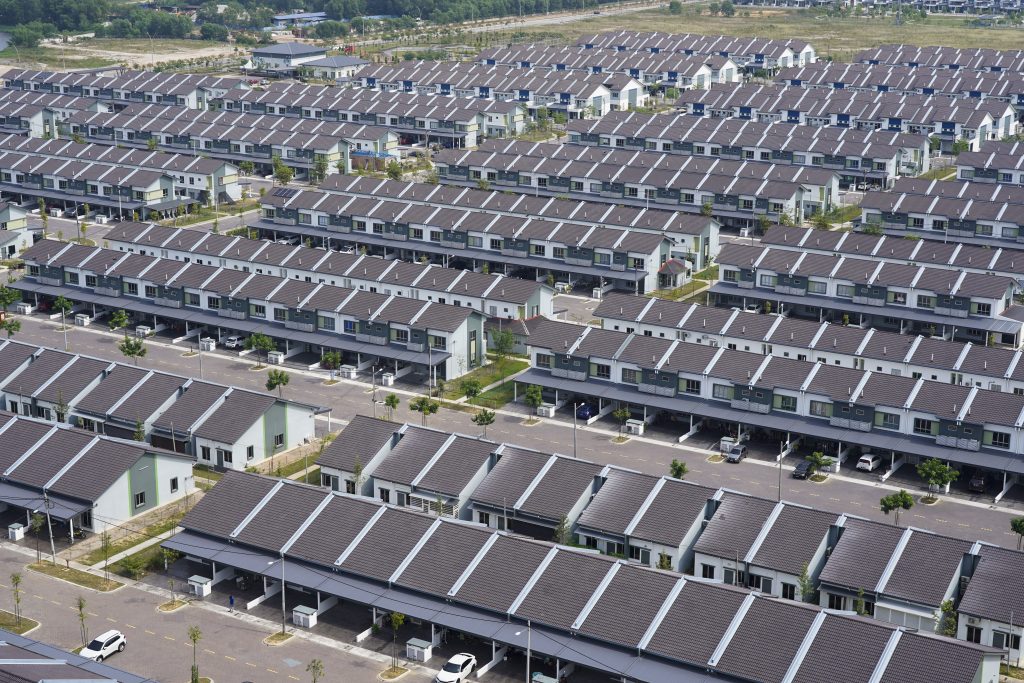
The government’s plan under the 13th Malaysia Plan (MP13) to build one million affordable homes between 2026 and 2035 signals a renewed push to address long-standing challenges in access to housing.
Yet, stakeholders across the spectrum from economists to builders, developers and analysts, stress that fiscal allocations alone will not resolve the structural weaknesses in the sector.
Calls are growing for regulatory reform, innovative financing schemes and stronger adoption of technology to ensure housing remains accessible while supporting industry growth.
Case for Rental Reform
Economist Dr Nungsari Ahmad Radhi believed Budget 2026 should focus not only on supply and subsidies, but also on strengthening Malaysia’s underdeveloped rental market.
“For housing, land is a state issue and planning is under local government. The federal government runs its own public housing in the Federal Territories (FT), while the Local Government Development Ministry (KPKT) has programmes such as People Housing Project (PPR) flats. Every budget will have allocations for these federal projects,” he told The Malaysian Reserve (TMR).
He said the government should table a Residential Tenancy Act in the next parliamentary session to diversify housing solutions.
“We have a somewhat underdeveloped tenancy market and, as in many economies, rental can be a solution for housing, not just ownership,” he added.
Nungsari pointed out that fiscal space remains limited, particularly at the state level, but the federal budget always allocates for its own projects.
“The real problem is that most states don’t have money. Exceptions may be Selangor and Penang,” he said.
He added that state fiscal weakness has restricted their ability to deliver large-scale housing projects. In his view, federal action to develop a proper tenancy framework could help address gaps in the market.
“On the supply side, priority is always given to the bottom half through public housing such as Kuala Lumpur City Hall (DBKL) and PPR flats. But maintenance and eligibility issues remain. Outside of FT and KPKT flats, state governments are mostly incapable of doing much,” he said. Nungsari also highlighted the squeeze faced by the middle class, adding that Selangor and Penang do well as they cater to the working middle class to buy affordable housing.
On the other hand, Universiti Teknologi Malaysia (UTM) Faculty of Social Sciences and Humanities political analyst Prof Madya Dr Mazlan Ali said the government’s plan is widely seen as pro-rakyat.
“I think the government’s plan to provide affordable housing through Budget 2026 will be the most popular issue politically because it is seen as pro-people,” he told TMR.
He said proposals to redevelop old and dilapidated housing in urban areas may face greater risk of rejection, as the Opposition continues to highlight concerns surrounding the Urban Renewal Act (URA).
Mazlan said Budget 2026 is expected to place strong emphasis on affordable housing, financing support and targeted incentives to help the lower B40 (bottom 40% income group) and M40 groups own homes.
“This is a good thing because both segments need advocacy and attention from the government. If there are no efforts to help them to meet housing needs, alongside incentives such as stamp-duty exemptions, the government risks being rejected in the next general election,” he cautioned.
Mazlan also expected the Opposition to present an alternative budget to highlight the supply of affordable housing for B40 and M40, a highly effective in attracting voter sentiment.
Builders Call for Tax Clarity
The Master Builders Association Malaysia (MBAM) said the government must provide continuity in infrastructure projects while addressing regulatory hurdles that drive up costs.
President Oliver HC Wee said the government’s commitment to build one million affordable homes provides a timely opportunity to mainstream Industrialised Building Systems (IBS).
He noted that the government would encourage more suppliers to invest in the technology if it takes the lead in incorporating IBS in all public projects, rather than just meeting the IBS score.
Wee also urged the reintroduction of Variation of Price (VOP) clauses in all government contracts, citing the volatility of global material prices.
“Private contracts, which account for about 70% of all projects, should also adopt VOP provisions to address price volatility and supply chain risks post-Covid-19. A fair formula balancing risks and rewards can be developed,” he said.
Beyond cost pressures, MBAM called for reforms in dispute resolution. Wee said amendments to the Construction Industry Payment and Adjudication Act (CIPAA) 2012 are needed to speed up judgements and improve cashflow for contractors.
Wee also encouraged wider adoption of collaborative contracts such as the CIDB Form of Contract for Building Works (2022), which emphasises proactive management and dispute avoidance.
Push for Financing Support
For developers, financing remains the most critical concern.
Radium Development Bhd group MD Datuk Gary Gan said access to loans is still the biggest hurdle for many households though schemes such as the Housing Credit Guarantee Scheme and step-up financing have made a difference, especially for first-time buyers and those in the B40 and M40 segments.
“We hope Budget 2026 will carry these programmes forward and introduce new support for households that traditionally find it difficult to secure a loan,” he said in a statement.
Gan said the proposed MADANI Deposit Scheme and a new Home Ownership Campaign (HOC) 3.0 could provide meaningful relief.
“The scheme, which offers subsidies of up to RM30,000 for buyers aged 21 to 40 purchasing homes worth up to RM500,000, and a new HOC with broader stamp-duty exemptions and developer discounts, would be very welcome,” he added.
On the supply side, he called for more incentives for innovation. He said supporting IBS, Building Information Modelling (BIM) and technology adoption can make construction more efficient and help keep homes affordable.
He noted that if costs are controlled through innovation and government support, developers can pass those savings onto buyers.
Gan also stressed the importance of location and planning, saying incentivising transit-oriented developments (TOD) can help families save on commuting costs and encourage more accessible, vibrant communities.
On the build-then-sell (BTS) debate, Gan urged balance. He stressed that buyers deserve protection and peace of mind, but a framework that is too rigid could strain smaller developers or slow new projects.
“A phased or hybrid model is a sensible way forward,” he said.
Market Outlook Remains Resilient
Juwai IQI co-founder and group CEO Kashif Ansari forecast that residential transaction volumes could grow by 3% to 5% in 2026.
“The biggest driver will be the RM15 billion of Sumbangan Tunai Rahmah (STR) and Sumbangan Asas Rahmah (SARA) cash assistance, which will enable families to afford bigger homes,” he said in a statement.
A family earning RM3,000 a month, he noted, could increase its affordable range from RM209,000 to about RM279,000 with an additional RM300 from cash assistance. Better-off households can afford a rise from RM339,000 to over RM408,000.
He said lower borrowing costs following the July 2025 Overnight Policy Rate (OPR) cut to 2.75% and support such as tax relief on mortgage interest and step-up financing would continue to encourage purchases.
Kashif also linked property demand to Malaysia’s economic transformation.
“When high-value industries like semiconductors, artificial intelligence (AI) and renewable energy expand, they generate jobs with good wages and attract foreign investment and talent. That fuels demand for housing at all price levels,” he said.
Malaysia’s property market recorded a decade-high in 2024 worth RM232.3 billion. Volumes eased 1.3% year-on-year in the first half of 2025 and values rose 1.9%.
Kashif said demand-side support from Budget 2026, along with major projects such as the Johor Bahru-Singapore Rapid Transit System Link, the Johor-Singapore Special Economic Zone and Mass Rapid Transit 3, would sustain momentum.
This article first appeared in The Malaysian Reserve weekly print edition
Source: The Malaysia Reserve









POST YOUR COMMENTS