Property News
Loan rejections emerge as key drag on housing market
Mar 13, 2026
by AKMAR ANNUAR
HOME financing has emerged as a growing challenge in Malaysia’s housing market, with the Real Estate and Housing Developers’ Association (Rehda) saying the highest loan rejection rates in the second half (2H) 2025 were recorded for homes priced between RM500,001 and RM700,000.
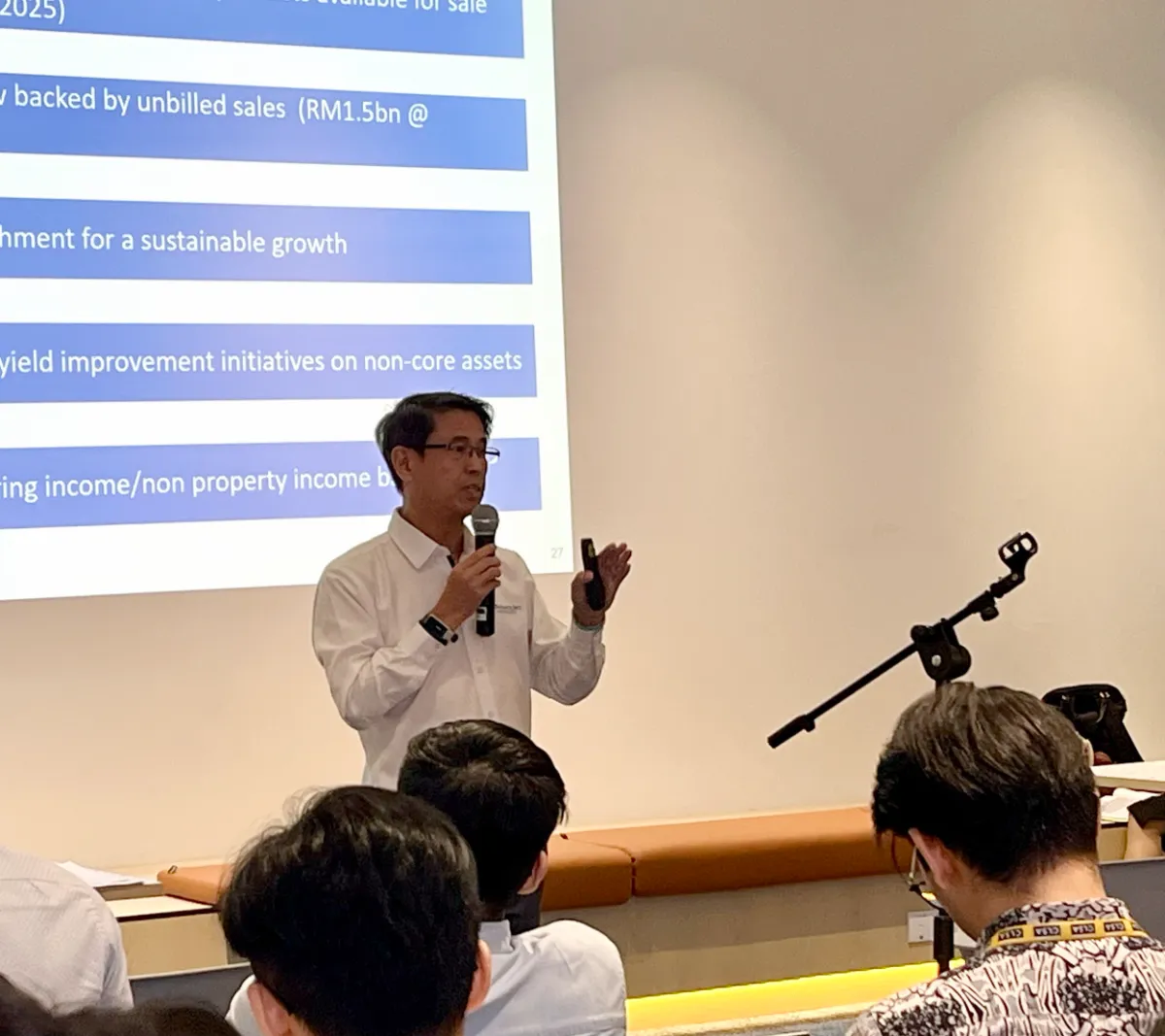
Rehda president Datuk Ho Hon Sang said the industry is entering 2026 with a cautiously neutral view, as developers continue to face weaker take-up, higher operating costs and tighter financing conditions.
“While the sign of optimism is positive, it should be noted that these surveys were conducted prior to the current situation in the Middle East,” he said at a media briefing today.
The association’s Property Industry Survey, which covered 166 members in Peninsular Malaysia, showed that 61 respondents launched projects in 2H 2025, with total units launched rising 0.6% to 17,971 units.
Sales, however, fell sharply to 3,784 units from 6,762 in 1H 2025, dragging the take-up rate down to 21% from 38%.
The figures point to a market where the issue is no longer just supply, but whether buyers can secure loans under current lending conditions.
Rehda immediate past president Datuk N K Tong said the issue should be viewed carefully, but acknowledged signs of a mismatch in the market.
“I say that very cautiously, because the way we do our industry is not actually market driven,” he said.
He said cross-subsidy requirements in housing development can distort pricing by pushing some units beyond what buyers can comfortably afford, especially after banks apply stricter credit assessments.
The survey showed that 72% of respondents faced financing issues in 2H 2025, with 83% specifically citing end-financing difficulties.
Developers identified ineligible buyer incomes, adverse credit history and inadequate financial documentation as the main reasons applications were rejected.
Rather than being concentrated in the high-end segment, the heaviest loan rejection rates were reported in the RM500,001 to RM700,000 range, where most respondents saw rejection rates of between 31% and 45%.
That is significant because the survey showed the market is still largely being built around lower- and mid-priced homes.
Thirty-six per cent of launches were priced at RM500,000 and below, while another notable share was in the RM500,001 to RM700,000 range.
At the same time, 26% of launches were concentrated in the RM1,000,001 to RM2.5 million bracket, especially in Shah Alam, Iskandar Puteri and Tebrau.
Rehda’s survey also found that 60% of respondents had unsold completed residential units as at Dec 31, 2025.
Two- to three-storey terrace houses made up the largest share at 26%, followed by serviced residences at 19% and single-storey terrace houses at 18%.
Respondents cited end-financing loan rejection, high prices and low demand or interest as the top three reasons for those unsold units.
Tong said this should prompt a broader rethink of how the financing system supports home ownership.
“Buyers have difficulty accessing financing, so as a thought experiment, if developers are required to cross subsidise housing, should we not do the same for home loans?” he said.
The pressure is also building on the cost side. 74% of respondents said their cost of doing business rose in 2H 2025, with nearly half reporting increases of between 3% and 6%.
Another 65% faced construction challenges linked to building material prices, supply shortages, labour costs and skill shortages.
Meanwhile, 43% said economic conditions had already forced them to take measures such as freezing recruitment, reducing benefits, rescheduling launches and cutting the scale of projects.
The separate Property Industry Sentiment Survey showed that 52% of respondents plan to freeze hiring in the next 12 months, while 55% intend to expand their land bank and 45% expect capital expenditure other than land to increase.
This suggests developers remain cautious on staffing and costs, but are not stepping back from longer-term positioning.
Another notable shift is where developers now see momentum. 32% of respondents identified industrial development as the current trend in the property sector, ahead of residential development.
That suggests capital and confidence may be tilting towards industrial-linked demand even as the housing segment remains constrained by financing friction.
On artificial intelligence, Rehda deputy secretary-general and Rehda WP chairperson Carrie Fong said the technology is more likely to help developers make better decisions than replace workers.
“We’re definitely moving into a more data driven market,” Fong told The Malaysian Reserve.
She said AI could help developers read local and international trends more effectively, but added that strategy and product planning still depend on human judgement.
“I don’t foresee it really replacing the workforce. I think we will use it to help us make more informed decisions,” she said.
Ho shared a similar view, saying AI could support predictive analysis and improve market studies, while digital tools such as building information modelling could help reduce cost overruns before construction begins.
The survey also found that 69% of respondents agreed green building certification improves environmental performance and helps drive sales.
The main perceived benefits were energy savings and lower operating costs, stronger project branding and eligibility for financing incentives.
At the same time, developers said wider adoption remains held back by cost concerns, lack of government incentives and limited public awareness.
Operationally, external policy changes are also affecting project costs.
Rehda’s presentation showed that 75% of respondents said Road Transport Department (JPJ) overloading enforcement had affected their projects, mainly through higher transportation costs, delays and increased material handling expenses.
For 1H 2026, 47% of respondents plan to launch projects, comprising 5,015 landed units and 12,669 strata units.
Most expect sales performance to improve from below 25% at the three-month mark to between 25% and 50% after six months.
Most states are expected to see launches concentrated in the RM300,001 to RM500,000 range, although WP Kuala Lumpur and Selangor are skewing higher at RM500,001 to RM700,000, while Johor remains concentrated in the RM1,000,001 to RM2.5 million range.
That suggests the market is not freezing, but operating in a more guarded environment where financing access, cost control and product targeting will matter more than raw optimism.
Source: The Malaysia Reserve





POST YOUR COMMENTS