Property News
Urban Renewal Act: Safer homes or fast track to
displacement?
Oct 27, 2025
The Federal Constitution guarantees property rights but permits deprivation only through valid and proportionate legislation
by AKMAR ANNUAR & AUFA MARDHIAH
MALAYSIA’S proposed Urban Renewal Act (URA) aims to fast-track the redevelopment of ageing flats and dilapidated neighbourhoods, but legal experts warn it could push the limits of constitutional protection for property rights.
Megat Iqbal & Co managing partner Megat Syazlee Mokhtarom told The Malaysian Reserve (TMR) that the 80% consent threshold under the bill risks transforming a super-majority decision into a tool of coercion.
He said on paper, URA purports to satisfy Article 13 by providing for compensation but in substance, it may stretch what “in accordance with law” can permissibly legitimise.
The law enables a majority of owners to force a sale of the minority’s private property for a fundamentally private development, which “runs perilously close to unconstitutionality,” he added.
The Federal Constitution guarantees property rights but permits deprivation only through valid and proportionate legislation.
Megat Syazlee said if Parliament passes URA unchanged, it will likely face a robust constitutional challenge.
“The real question is whether urban renewal, driven by private consensus and commercial interests, qualifies as a public purpose sufficient to justify compulsory
acquisition. Even with compensation, that premise will be tested in court,” he said.
Legal Footing vs Constitutional Limits
From the government’s standpoint, once the URA becomes law, any acquisition done following its rules will be legal.
If 80% of owners agree, the state can compulsorily acquire the remainder — a mechanism similar to those in Singapore and Hong Kong, where redevelopment can proceed once a super-majority threshold is met.
However, Megat Syazlee pointed out that those jurisdictions operate with specialised tribunals and transparent verification processes, while Malaysia’s draft Bill currently lacks such safeguards.
He warned that the absence of an appeal body or independent consent audit leaves affected owners few options beyond costly judicial review.
“Courts are reluctant to interfere in administrative land decisions unless there is clear bad faith or procedural illegality,” he said.
That leaves constitutional litigation as the only safety valve and a high bar to clear. Malaysian courts have historically interpreted Article 13 to give Parliament broad leeway as long as compensation is paid, but he believes URA represents a qualitative leap.
“Making property rights subject to an 80% vote is a structural shift. It changes the very nature of ownership, not just its price,” he told TMR.
Developer Involvement, Incentives
Beyond the legal thresholds, the Act is also designed to attract private capital into urban rejuvenation.
The URA will allow “qualified” developers to undertake renewal projects, supported by a package of incentives aimed at improving project viability.
These include tax breaks such as waivers on development charges and reduced land premiums, density bonuses permitting higher plot ratios and fast-track approvals for land use and building plans.
State authorities may also ease requirements for affordable housing quotas and open spaces to encourage greater participation in redevelopment efforts.
A key feature is the establishment of an Urban Renewal Fund, designed to bridge financing gaps by covering upfront costs such as relocation and site clearance.
Under the Kuala Lumpur Structure Plan 2040, 139 sites have been identified for potential renewal, with an estimated gross development value (GDV) from RM332 billion to RM355 billion. An additional 534 ageing developments have been earmarked for redevelopment nationwide.
Housing and Local Government Minister Nga Kor Ming said revitalising even the Kuala Lumpur projects alone could inject over RM300 billion into the economy while improving residents’ living standards.
Before URA, such projects were uncommon due to the need for 100% owner consent. For example, the Pekeliling Flats in Kuala Lumpur (KL) were redeveloped by MKH Bhd into TR Residence and TR2 Residence, with units priced between RM500,000 and RM1.2 million.
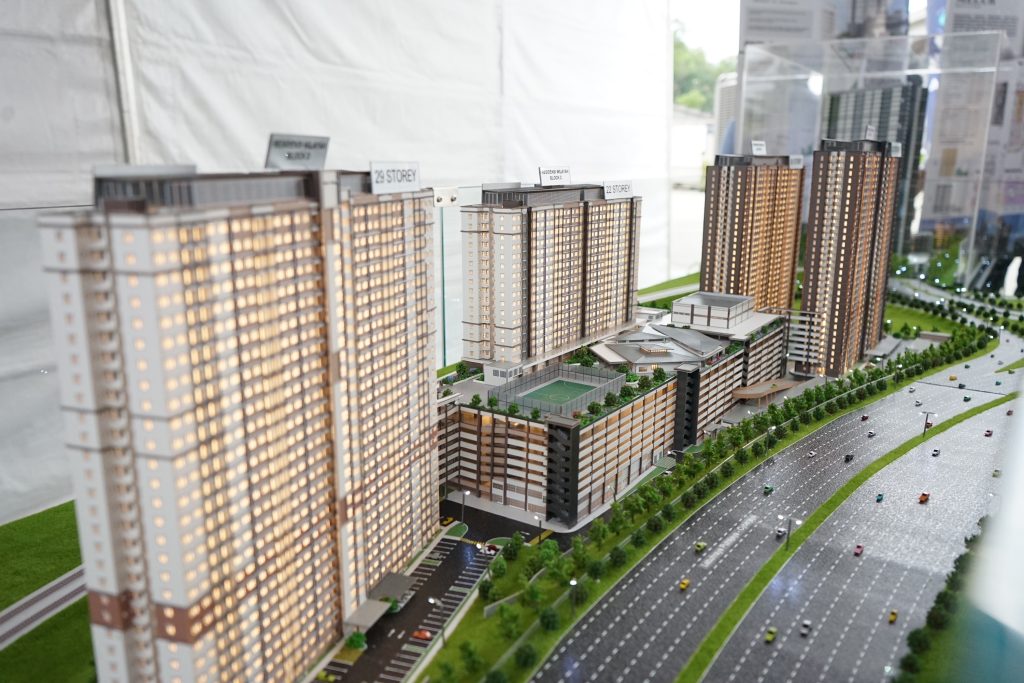
Projects such as the 1Razak Mansion and Residensi Kerinchi are often cited as successful precedents where full consent was obtained, while the Pekeliling Flats serve as a reminder of the risks posed by delays and deadlocks.
Project such as 1Razak Mansion is often cited as successful precedents where full consent was obtained (pic: MEDIA MULIA)
Safeguards Must Go Beyond Compensation
Megat Syazlee said URA’s commitment to providing “no less favourable” compensation is ambitious yet lacks precise definition, necessitating clear legal safeguards. This principle should ensure full indemnification for affected owners, guaranteeing equal or enhanced living conditions beyond mere market value compensation.
“That means covering relocation, tenure security and community continuity. If an owner must move, they should emerge whole or better off financially, socially and physically.”
He urged the government to codify detailed valuation formulas within the law, including disturbance allowances and relocation benefits, verified by independent assessors.
In the absence of such binding provisions, the commitment to “no less favourable” compensation risks being reduced to a rhetorical device rather than an effective protection.
Megat Syazlee also called for stronger statutory guarantees for displaced residents, including a right of return and explicit tenant protection.
“Urban renewal should be a journey that brings residents back home, not a one-way ticket out,” he said.
Tenants are integral to the community fabric and must not be overlooked.
He further cautioned against structural conflicts in the draft Act, which currently permits developers to both gather owner consent and conduct feasibility studies, raising concerns about impartiality.
To maintain integrity, he proposed that consent verification and safety assessments be carried out by a neutral, state-appointed panel instead of the interested developer.
Rajawali Flats: One Project, Many Versions of Consent
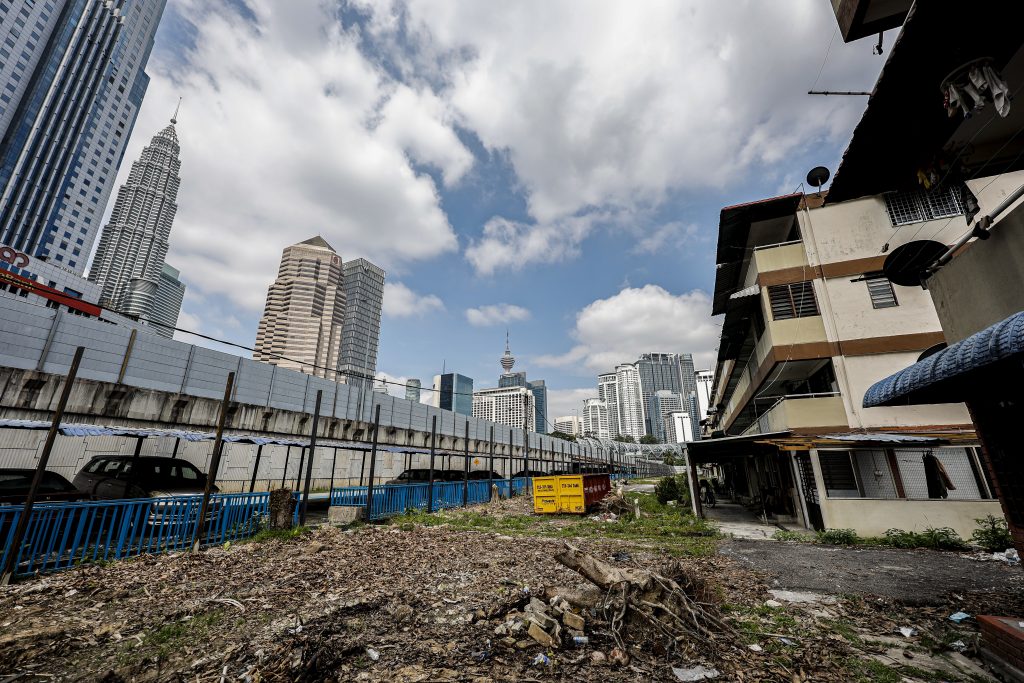
In Taman Aman Desa, Cheras, Flat Taman Rajawali has become a live case study illustrating the practical challenges of redevelopment.
The site is officially listed by the Kuala Lumpur City Hall (DBKL) as one of 49 potential renewal locations in KL and is linked to the neighbouring Desa Aman and Segar flats — all earmarked for integration into a new mixed-use project.
According to the Residents’ Association of Desa Aman (RADA), the original plan was to relocate owners from all three low-cost blocks into one new tower at Rajawali, while the remaining blocks would be sold on the open market.
RADA representative Bob Lew said this is how the developer recovers costs and generates profit.
“But we have never seen any transparent disclosure or dialogue regarding the ratios or agreements,” he told TMR.
The signboard at the site lists a 700-unit project, roughly half described as “affordable housing.”
With Rajawali’s original stock numbered around 80 units, residents question who the remaining 270 “affordable” units are intended for and under what scheme.
Lew said developers had offered RM104,000 to some owners who agreed to cash compensation, but the fair “Madani housing” benchmark should be around RM300,000.
Several residents who rejected the offer took the case to court and secured higher compensation; the developer has since filed an appeal.
At least 18 residents remain in dispute with the developer, who filed a police report in May alleging that they were “trespassers” illegally occupying units. Community leaders dispute this, saying most of the individuals are lawful occupants awaiting final terms.
One resident said instead of negotiation, they were treated as intruders, and the police report only escalated tensions.
Under DBKL’s current urban renewal rules, 75% consent is considered sufficient to proceed. Lew said this means 60 owners approving but 20 rejectors could determine the fate of the entire project.
“If 20 plus one stand firm, the project collapses. That’s how fragile the balance is,” he said.
Residents want an open, recorded dialogue with DBKL and the developer to clarify compensation and relocation guarantees.
“What we need now is truth and transparency. Who owns what, what is offered and what happens to those who disagree?” Lew asked.
Economic Impact on the Property Market
While disputes over consent dominate current debate, proponents believe URA could reshape Malaysia’s property landscape by rejuvenating city centres and raising asset values.
Projects like 1Razak Mansion and Residensi Kerinchi are often cited as examples where redevelopment both improved living standards and lifted property prices.
In similar upgrades, old units once worth under RM100,000 were replaced with new apartments valued at several hundred thousand ringgit.
However, higher property values also mean higher costs. Analysts warn that assessment rates and maintenance fees tend to rise after renewal, leaving some low-income owners struggling to cope.
Observers further caution that without strict oversight, urban renewal could spark speculation and gentrification, as seen in some regional redevelopment schemes.
To prevent this, the Bill guarantees one-for-one replacements and “no less favourable” housing for affected owners. Even more, Prime Minister (PM) Datuk Seri Anwar Ibrahim had also reiterated that renewal “must prioritise public benefit over private profit.”
Developers See Renewal Potential
While lawyers and residents call for stronger checks, developers say URA could unlock long-stalled opportunities in Malaysia’s ageing housing market if incentives and trust are balanced correctly.
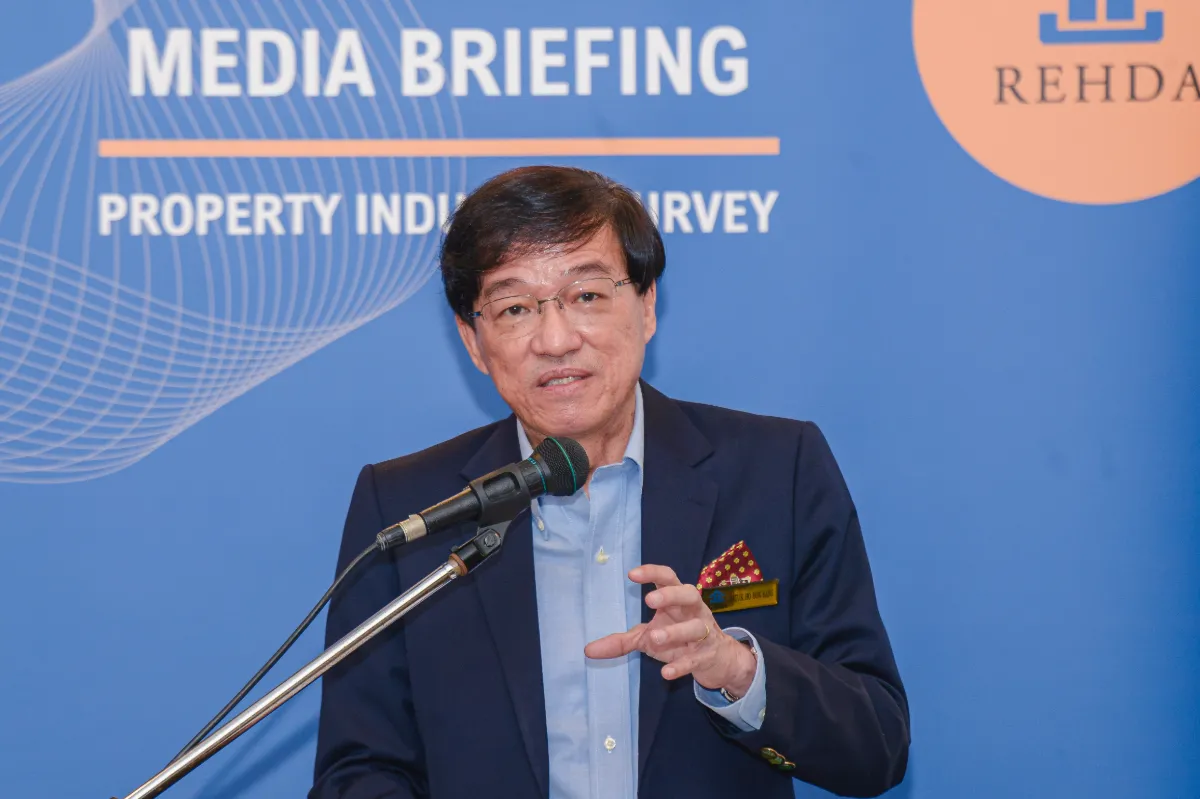
The Real Estate and Housing Developers’ Association (REHDA) viewed URA as an overdue catalyst for city rejuvenation, provided the process remains transparent and equitable.
President Datuk Ho Hon Sang told TMR that renewal can unlock prime land in ageing neighbourhoods and attract new investment into Malaysia’s cities.
“The framework gives clarity to developers and owners, which is crucial for confidence and planning,” he said.
Clear guidelines on developer qualification and a well-managed Urban Renewal Fund are vital to ensure projects remain financially sustainable without burdening residents.
Meanwhile, deputy president Datuk Zaini Yusoff said the urgency lies not only in modernising infrastructure but also in addressing the human aspect of renewal.
“Some families live with eight or nine people in a single small unit. Renewal is necessary if we want them to live in decency,” he said.
Zaini stressed that affordability remains the key factor in securing community support. If new units are priced beyond their reach, the exercise risks becoming gentrification rather than genuine renewal.
At the same time, he acknowledged that many residents fear higher costs and uncertainties if required to relocate, especially when compensation is weighed against the actual cost of buying a new home.
These concerns can be addressed through careful phasing and affordability measures.
Zaini added that the government should take a more active role in facilitating urban renewal by providing land, leading coordination efforts and engaging directly with the public.
“I believe the government can take the lead. If the land is already publicly owned, they can redevelop the area and provide each resident with a replacement unit. That way, I don’t think there will be much dispute,” he said.
Financing Structures, Risks
Even with developer optimism, financing remains the toughest barrier to making renewal work at scale. Urban renewal projects require heavy upfront costs for unit acquisition and relocation before any revenue is realised.
URA limits participation to qualified developers vetted by state and federal committees for financial strength and track record. This is meant to deter “fly-by-night” firms after reports of shell companies rushing to secure consent deals.
The Urban Renewal Fund de-risks projects with high public value but low profitability.
The Housing Ministry is also encouraging a build-then-sell model to avoid abandoned projects. Once an area is gazetted, developers must begin work within 24 months or risk losing the project.
However, past media reports stated that Malaysia could face challenges similar to Hong Kong’s URA, which suffered large deficits when property values softened.
Larger developers may need to partner with real estate investment trusts (REITs) or private-equity funds to spread risk — a structure that financial institutions such as Bank Pembangunan Malaysia Bhd (BPMB) may soon be asked to support.
Better Value, More Costly
Beneath the legal debates and developer calculations lies the human cost — how renewal changes the day-to-day affordability of life for residents.
Under URA’s one-for-one scheme, existing owners will not need to pay any money to obtain their replacement unit.
They surrender the old property rights and in return receive a new property of greater value (with a new title) with no new loans or top-ups required for standard replacement units.
For former renters, the policy is not explicitly detailed in the Act, but past precedents suggest they may be offered a path to ownership at a concessionary price of around RM35,000 to RM40,000, or given alternative accommodations by the authorities.
Historically, public flats built by DBKL or agencies were extremely cheap. Under the People’s Housing Project (PPR) scheme, families could rent a unit for RM124 per month or buy it for RM35,000 (RM42,000 in Sabah and Sarawak).
DBKL flats like Razak Mansion were sold to occupants at similar prices decades ago. Residents typically paid almost nothing in monthly charges — RM35 for maintenance in Razak Mansion’s case — while DBKL absorbed most utilities and repairs.
Property taxes were also minimal because units were valued at around RM70,000.
After renewal, owners are given a new home free of charge, often worth five times more.
At Razak Mansion, residents received modern apartments valued at about RM400,000 in exchange for units previously worth RM70,000.
But their maintenance fees rose significantly; earlier reports said from around RM35 to RM120, and they had to start covering all common utilities themselves.
Assessment taxes also increase in line with property value, raising concerns about long-term affordability for low-income households. For renters turned owners, there may be new loan commitments.
In Razak Mansion, 101 long-term tenants were allowed to buy new units for RM42,000. Assuming a small loan, that adds around RM200 per month in repayments, on top of RM120 maintenance and higher taxes.
This means a family that previously paid RM124 rent could now face RM350-RM400 in monthly housing-related costs.
The trade-off is that residents gain a far more valuable home and improved living conditions with no upfront cost, but recurring expenses rise sharply.
Without measures like subsidies for maintenance or capped assessment rates, some fear poorer residents may eventually be forced to sell, echoing concerns raised in other redevelopments.
Renewal with Rights or Renewal Without Trust
URA is meant to rejuvenate Malaysia’s ageing housing stock and attract private capital into neglected zones.
But by lowering the consent bar to 80%, it risks replacing consensus with compulsion.
“Urban renewal can be progressive only if it is constitutional. It must empower people, not displace them,” Megat Syazlee said.
If Parliament strengthens the Bill with higher thresholds, transparent processes and enforceable rights, it could achieve what it promises namely safer homes, fairer outcomes and renewed confidence in public institutions.
Regardless, urban renewal can inject billions into the economy and lift thousands from unsafe flats but without trust, inclusion and clear safeguards, development risks becoming displacement by another name.
This article first appeared in The Malaysian Reserve weekly print edition
Source: The Malaysia Reserve




POST YOUR COMMENTS